SpaceX · Starship · 14 Nov 2026
Starship Flight 15 recap: the first ship catch, and a booster lost in the Gulf
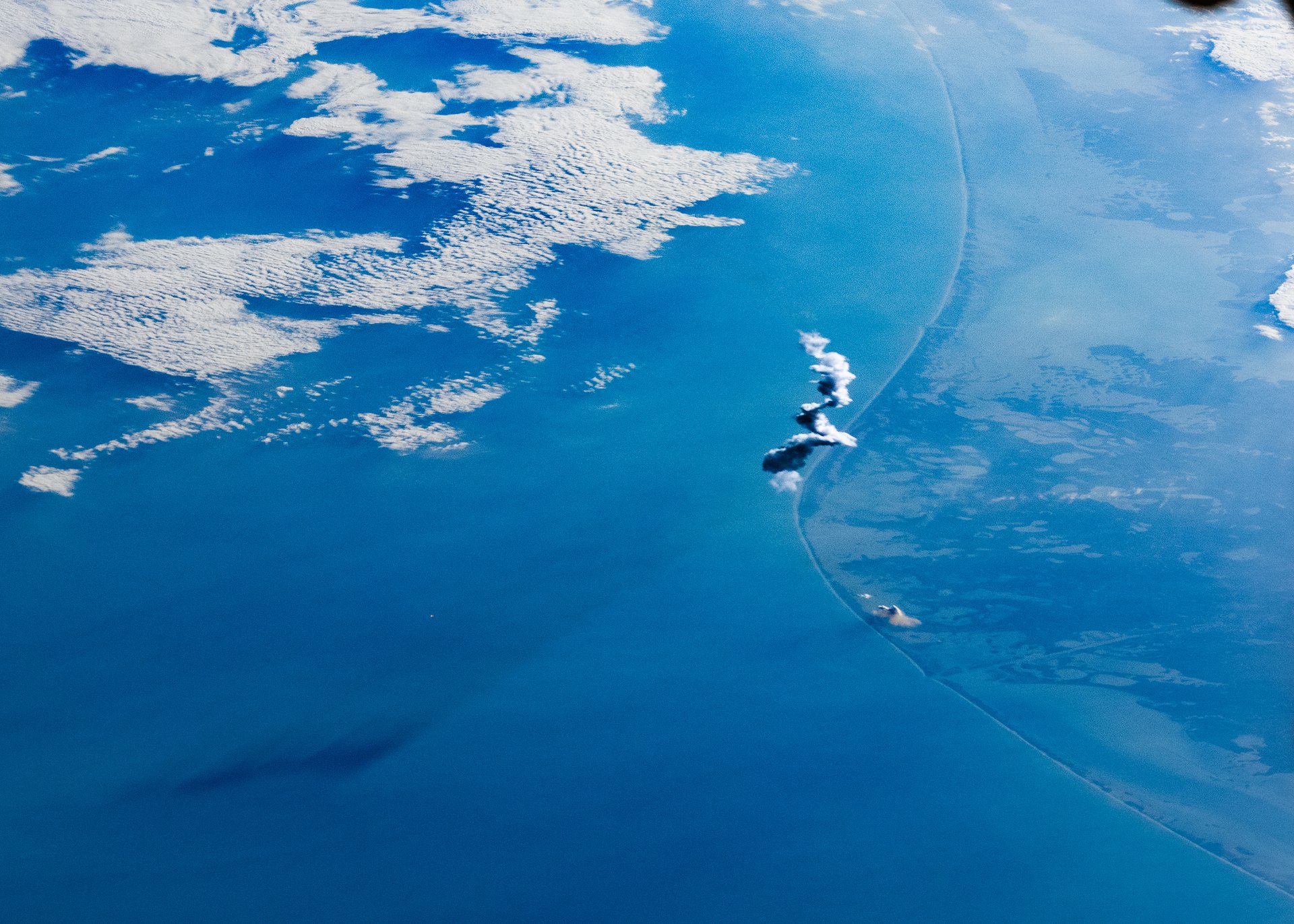
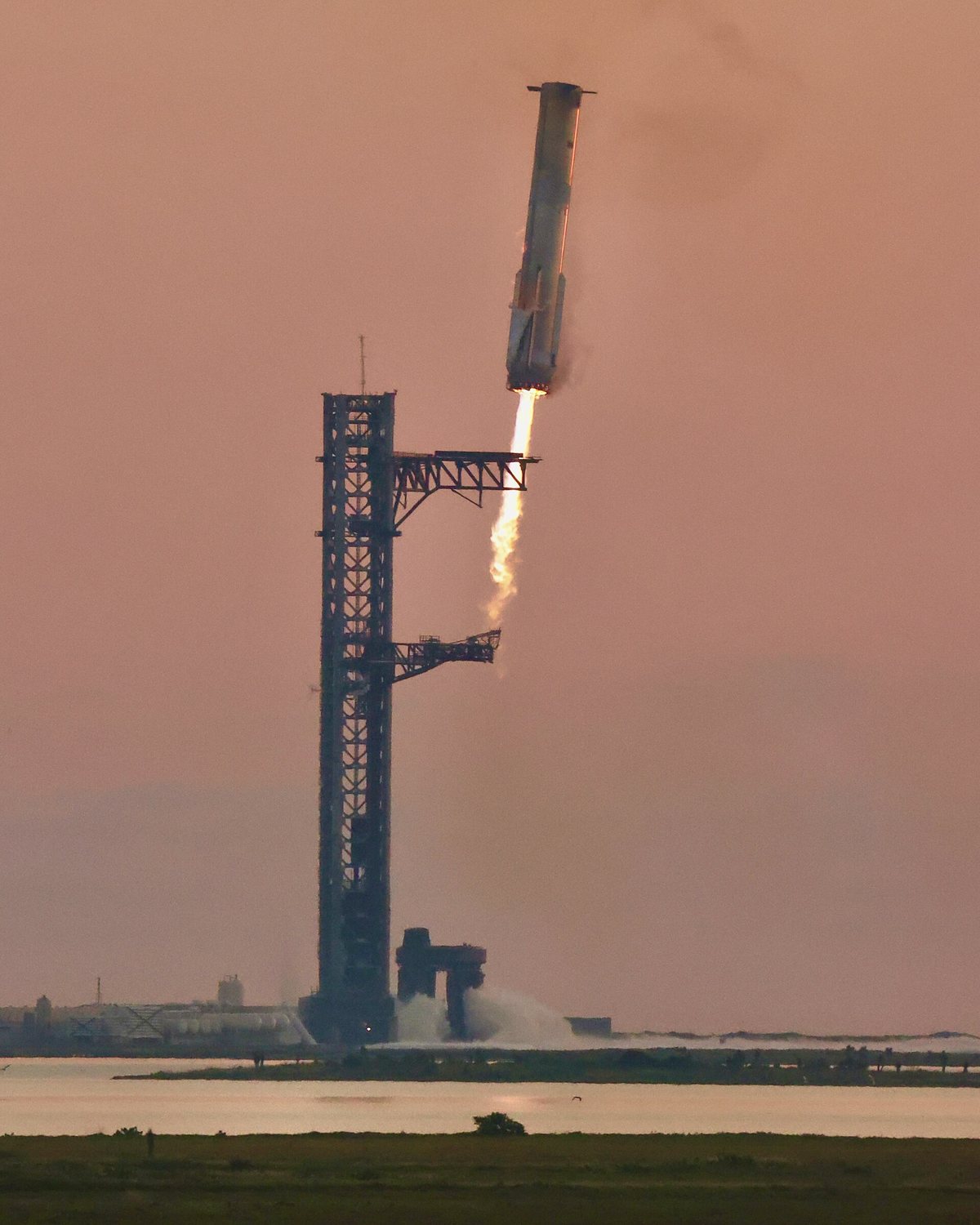
Starship Flight 15 lifted off from Starbase on Friday, Nov 13, at 5:48 p.m. ET (2:48 p.m. PT), deployed 26 Starlink V3 satellites, and spent about 22 hours in orbit. On Saturday at about 4:21 p.m. ET (1:21 p.m. PT), Mechazilla caught the ship at the tower, the first time a Starship upper stage has been returned to the launch site and caught. Super Heavy Booster 22 diverted to a Gulf splashdown; photos later showed the hull tipped over and broken in the water.
On this page
Updated
The editor holds Tesla and SpaceX shares. Supercharged Daily is independent and not affiliated with either company. Nothing here is financial advice.
Launch
Flight 15 left Starbase on Friday, Nov 13, at 5:48 p.m. ET (2:48 p.m. PT). The window had opened at 5:45 p.m. ET. At 5:51 p.m., SpaceX posted that hot-staging had succeeded and the ship's Raptor engines had ignited. Super Heavy was "boosting back towards Starbase for a catch." The ship's ascent burn finished at 5:57 p.m. on a planned suborbital path while teams checked systems.
The booster
Booster 22 was the first Super Heavy V3 booster SpaceX planned to catch. At 5:55 p.m. ET (2:55 p.m. PT), SpaceX said it had "diverted to an offshore splashdown in the Gulf." It later posted video of the landing burn and splashdown, and photos that evening show the hull tipped over and broken in the water.
SpaceX's Flight 15 page, rewritten as a post-launch recap by the evening of 14 Nov, now gives an official account of the divert that was not on the page that morning. It says the boostback burn ended early because of low fuel mass, with the root cause still under investigation, and that the booster's guidance, navigation and control system then triggered an automated abort during coast and diverted it offshore. It says the landing burn was carried out, with the engines cutting off while the booster was hovering over the Gulf, and that "upon landing burn shutdown, the Super Heavy's flight termination system was triggered." (As of 14 Nov 2026, about 6:50 p.m. ET.)
Saturday morning, SpaceX said recovery teams were "immediately onsite to safe the area" and that its environmental team is "ensuring any debris that washes onshore is recovered." It also said it is "committed to protecting and restoring Boca Chica Beach." It did not say, in that post, that debris had already come ashore.
Before launch, the same Flight 15 page said three first-generation boosters had been caught and two later reflown. That wording was still on the pre-launch version when I re-checked it on the morning of 14 Nov; the recap now on the page no longer carries that sentence. Flights 12 and 13 ended in hard V3 splashdowns. Flight 14's booster came down in the Gulf with no catch attempt. No V3 booster has been caught.
In orbit
At 6:11 p.m. ET, SpaceX called "Go for orbit" and said a short single-Raptor burn would put the ship into an orbit of about 275 km. That insertion burn came at 6:15 p.m. SpaceX said Starship "enters orbit of Earth for the second time." The first was Flight 14 on Sep 28, which came down in the north Pacific. After the satellites were out, SpaceX said the ship was starting a long coast of about 21 hours, with "a few early deorbit options" if needed. Overnight it called the ship and its heatshield "healthy," with a catch planned "~22.5 hours after launch."
Payload
SpaceX began deploying 26 Starlink V3 satellites at 6:27 p.m. ET (3:27 p.m. PT) and said the sequence would take about 42 minutes. At 7:06 p.m. ET (4:06 p.m. PT) it posted, "Payload deploy complete. All 26 @Starlink V3 satellites are in orbit." Starlink said the load would add "up to 26 Terabits" of capacity to the constellation.
Deorbit and reentry
Saturday afternoon, SpaceX said teams had polled go for a return to the launch site. The deorbit burn was at 3:25 p.m. ET (12:25 p.m. PT). SpaceX called it a "good deorbit burn" and said the ship was on course to reenter about an hour before the planned catch. Hosts, on the deorbit clip, called a "Perfect shutdown." Reentry began at 3:58 p.m. ET (12:58 p.m. PT), with plasma on the onboard cameras. At 4:18 p.m. ET, SpaceX said the ship was banking and on final approach to Starbase.
The catch
At 4:21 p.m. ET (1:21 p.m. PT) on Saturday, Nov 14, SpaceX posted, "Mechazilla catches Starship!" That 4:21 p.m. time is when the confirmation post went up, not the exact catch second. The pre-launch timeline put the catch at T+22:32:34, also 4:21 p.m. ET from the 5:48:55 p.m. ET liftoff. SpaceX had already called this "the first time ship's return to launch site and catch at Starbase." Only the ship was caught, because the booster was already in the Gulf.
Mechazilla catches Starship! Congratulations to the entire SpaceX team on this incredible achievement!
— SpaceX (@SpaceX) November 14, 2026
What it leaves open
A ship has to survive reentry before it can be reused, and this flight brought one back to the tower. The whole vehicle still needs a booster catch, and no V3 booster has been caught. SpaceX has not set a Flight 16 date. Starlink has the 26 V3 satellites in orbit. Elon Musk wrote that "future Starship flights will carry over 50 Tb/s of Starlink bandwidth to orbit." That line is about future flights, not this one.
I covered the mid-mission hours, while the ship was still in orbit, here, and the running Flight 15 record is on the Starship tracker.
Which matters more: the first ship catch, or the lost V3 booster?
— Alex R
Sources: @SpaceX liftoff, hot-staging, ascent complete, booster divert, landing burn and splashdown, debris recovery, go for orbit, orbital insertion, payload deploy start, payload deploy complete, long coast, ship healthy, go for return, first ship catch framing, deorbit burn, reentry, final approach and "Mechazilla catches Starship!"; @Starlink; @elonmusk on future 50 Tb/s flights; Booster 22 as the first V3 planned for a catch; SpaceX Flight 15 page (pre-launch tally as of the morning of 14 Nov; post-launch recap, including the divert and flight-termination wording, as of about 6:50 p.m. ET the same day); Flight 14, Flight 12 and Flight 13 pages. Never Electrek. Video: SpaceX. Music: "Ascension" by Scott Buckley (CC BY 4.0).