SpaceX · Starship · 21 Oct 2026
SpaceX just put dates on Starship's next five steps. Here's each one next to the old target, and the launch caps the plan runs into
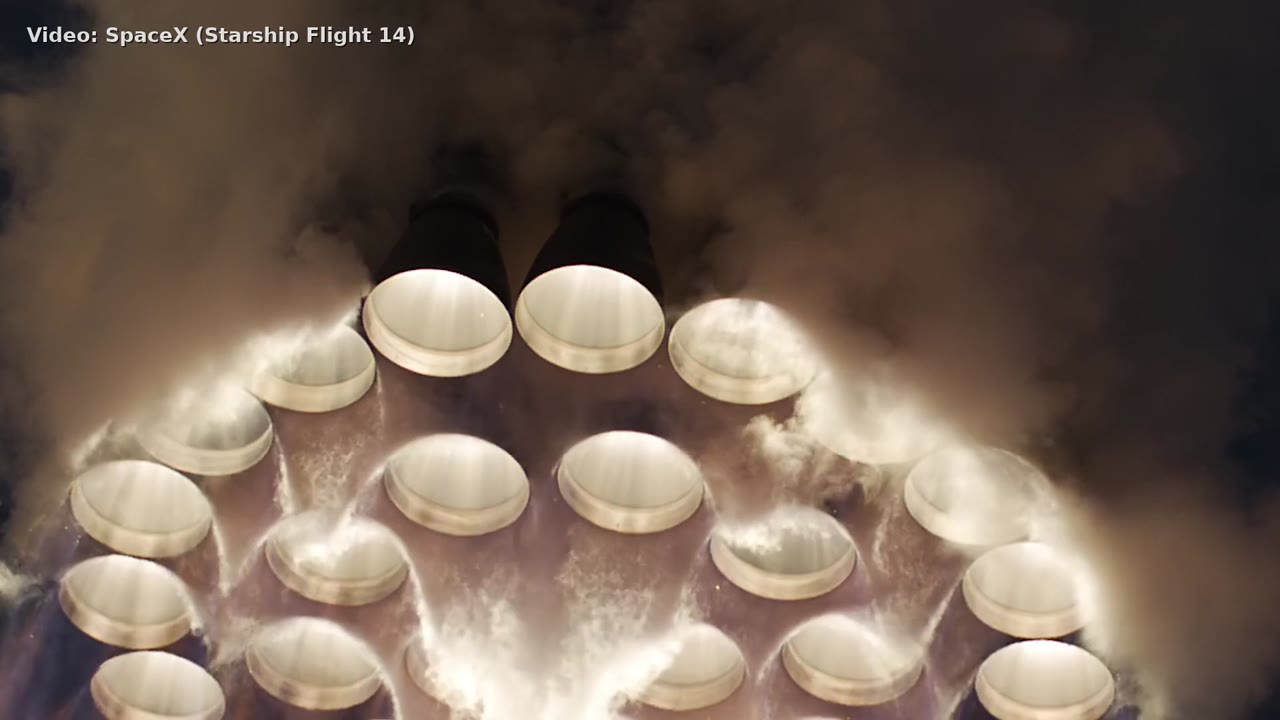
After the headline numbers on Tuesday's earnings call, Elon Musk opened his remarks with Starship. He said Flight 15 will try to catch both the Super Heavy booster and the ship "next month." Gwynne Shotwell added a reflown ship and the first orbital refueling attempt by early 2027, and Musk said Starship should be flying weekly in the first half of next year. These are targets, not results. Here's every date they gave, how it compares with what was promised before, and the one number that matters most for the cadence goal: how many launches each pad is actually allowed.

What was actually said
The call began at on Tuesday, October 20, streamed live on X from SpaceX's Starlink factory in Bastrop, Texas. Musk opened with a recap of Flight 14, then turned to Flight 15. "We're going to attempt to catch both the booster and the ship," he said, according to the call transcript. "If we succeed, it will be the first time that an orbital launch vehicle has been fully recovered." He hedged straight away: "Success is not guaranteed on these first flights, but I'd say it's more likely than not."
SpaceX then played what Musk called a simulation of a ship being caught by the tower's arms. Teslarati described it as an animation of roughly 80 seconds that ran under an "Up Next: Ship Catch" banner. To be clear, that clip is a render, not flight footage. Nothing in it has happened yet.
Q3 2026 Financial and Operational Results
— SpaceX (@SpaceX) October 20, 2026
Post: SpaceX on X, its Q3 results post from Tuesday. If the post doesn't load, the link opens it on X.
Every Starship date from the call, checked
I've sorted each statement by whether it's something SpaceX has done or something it's aiming for. Only the first row is done.
| Milestone | What SpaceX said on Oct 20 | Earlier target | Status |
|---|---|---|---|
| Reach orbit with a real payload | Flight 14 reached orbit and delivered 26 Starlink V3 satellites, which SpaceX called its first revenue-generating Starship mission | n/a | Done (Sep 28) |
| Catch the ship (and booster) at the tower | Flight 15, "next month"; both stages back to the tower "this year" | Musk on Oct 10: "a little bit before Thanksgiving." An unofficial planning slide reported by NASASpaceflight said no earlier than Nov 8 | Target. Never done for a ship |
| Refly a ship | "by early next year" (Shotwell) | Musk on Oct 10: Flight 16 could refly both stages | Target |
| On-orbit refueling attempt | "early next year" (Shotwell) | March 2025, then March 2026, per NASA's inspector general | Target. Slipped twice already |
| Weekly Starship flights | "at some point in the first half of next year"; twice weekly or more by end-2027 (Musk) | n/a | Target. 2026 pace is about one every two months |
| A few hundred V3 satellites up | "by mid-next year" (said on the call), the point where users "really feel the impact" | n/a | Target. 26 in orbit so far |
| First launch from Louisiana | Internal aim 2028; 2029 "highly likely" (said on the call) | Louisiana's announcement: first launch targeted as soon as 2029 | Target, now a year earlier internally |
Sources: call transcript (it doesn't name the speaker for the V3 and Louisiana answers); SpaceX on X; Teslarati and The Grid Fin on Musk's Oct 10 remarks; NASA OIG report IG-26-004; Louisiana Economic Development. All linked below. The table and the "status" calls are my own.
The catch: what's new, and what's still missing
A ship catch isn't a new idea. SpaceX has talked about it since late 2025, and Musk said on October 10 at Giga Texas that Flight 15 would try it, as Teslarati reported. What Tuesday added was a firmer window, "next month," and SpaceX's stated expectation for the licence. Shotwell said SpaceX has had "significant constructive engagement with the FAA" and expects the Flight 15 licence "to include return to launch site and tower catch for both stages."
That's an expectation, not an approval. Here's where the paperwork actually stands. The FAA has finished an environmental assessment that covers temporary airspace closures for "an additional Starship reentry trajectory to the Boca Chica Launch Site." That's the route a ship needs to fly home over land instead of splashing into the ocean. The environmental step is one part. A licence change for the flight itself is a separate one. When I checked the FAA's Starship page at , it didn't list a Flight 15 licence modification. SpaceX also hasn't published a launch date.
The hardware record explains why a ship catch is the harder half. Boosters have been caught three times, on Flights 5, 7 and 8, all in 2024 and early 2025. No ship has ever come back to land. Every one so far has splashed down at sea or been lost before it got there, according to our Starship flight log. A ship comes back from orbit far faster than a booster comes back from staging, and it has to survive reentry before it can line up with the tower.
Refueling: the date that has moved the most
Orbital refueling matters most for NASA. The Starship Moon lander needs many tanker flights to fill it up in orbit. NASA's inspector general reported in March that SpaceX's ship-to-ship propellant transfer test "was planned for March 2025" and had been delayed 12 months to March 2026 (report IG-26-004). That date has also passed. Shotwell's "early next year" fits NASA's own slides from this month's International Astronautical Congress, which place the demo in the first quarter of 2027, as The Grid Fin summarised them.
That would make it nearly two years late against the first plan. It also depends on Flights 15 and 16 going well. Refueling needs two ships in orbit at once, and a fast cadence only works if ships come back and fly again.
Weekly flights: the launch caps nobody mentioned
This is the part of the plan I think deserves the most scrutiny, because the limits are public. In 2026 Starship has flown three times: Flight 12 on May 22, Flight 13 on July 24 and Flight 14 on September 28. That's a gap of 63 days and then 66 days. A weekly cadence is about nine times faster than that. Twice weekly works out to more than 100 flights a year.
Even if the rockets are ready, each pad has a cap on how many launches the government has signed off on:
| Site | Starship launches allowed per year | Status |
|---|---|---|
| Starbase, Texas | 25 | Approved (FAA) |
| Starbase, Texas (proposed) | 100 in phase 1, 456 in phase 2 | Early review. Public scoping meetings Nov 17–19, comments close Nov 30, 2026 (FAA) |
| LC-39A, Kennedy Space Center | 44 | Approved (FAA record of decision). No Starship has launched there yet |
| SLC-37, Cape Canaveral | 76 | Air Force approved (record of decision). The FAA opened an extra review for commercial launches on September 29 |
Caps are from the linked FAA and Department of the Air Force documents. The arithmetic below is my own.
Weekly flights work out to 52 a year. That's more than Starbase's 25 alone, so a weekly pace needs Florida to be flying too. NASASpaceflight has reported that Flight 16 is aimed at December and could be the first from LC-39A; The Grid Fin, citing NSF, gives an unofficial no-earlier-than date of December 10. Twice weekly, about 104 a year, is more than Starbase and LC-39A combined (69). That means it needs SLC-37 and its FAA review, the bigger Starbase approval, or both. None of this makes the target impossible. But the dates in the call depend on regulators as well as rockets, and those reviews have their own public calendars.
The satellite math
The cadence goal is mostly about Starlink. Musk said users will need "a few hundred V3 satellites" before they "really feel the impact," and that SpaceX can get there by mid-2027. Flight 14 carried 26, and those are the only V3s in orbit so far. At that load, 300 satellites would take about 12 flights. Teslarati reports that Starship can carry up to 60 per flight. At that load it would take five. Either way, the mid-2027 goal only works if Starship flies far more often than it did this year.
My read
The useful thing about Tuesday is that SpaceX put these dates on an investor call, where they'll be checked against the next quarterly report. The ship catch is the one to watch, because it gates almost everything else in the table: a reflown ship, a cheap tanker, and a cadence high enough to put hundreds of V3s up by mid-2027. Musk himself called success only "more likely than not." My view: a successful Flight 15 by the end of November is plausible, given the hardware testing so far and the FAA's finished trajectory review. The refueling date has already slipped twice, and the weekly cadence depends on approvals that aren't finished, so I'd treat those as goals until they're on the calendar.
When Flight 15 gets a date, our Starship Mission Control will have the countdown. You can check whether the climb might be visible from your town, and which way to look, on Can I see the launch?
Sources: SpaceX Q3 2026 earnings call transcript (Quartr via Stock Analysis, 20 Oct 2026); @SpaceX on X (20 Oct 2026) and Q3 highlights post (20 Oct 2026); Teslarati (20 Oct 2026) and (12 Oct 2026); The Grid Fin on Musk's Oct 10 remarks and on NASA's IAC schedule; NASASpaceflight (Oct 2026); NASA OIG, IG-26-004 (10 Mar 2026); FAA Starship Boca Chica project page (checked 21 Oct 2026); FAA LC-39A record of decision; Department of the Air Force SLC-37 record of decision; Federal Register (29 Sep 2026); Louisiana Economic Development. Quotes are from the transcript. The tables, flight-gap and satellite arithmetic, and analysis are my own. Dates SpaceX gave are company targets, not commitments.
— Alex R