Tesla · 16 Oct 2026
Tesla’s new Roadster flew. Here is what Tesla revealed, what it costs to reserve, and what it means
Nine years after the 2017 unveil, Tesla showed the next-generation Roadster driving upside down on a ramp, lifting itself over a line of Teslas on cold-gas thrusters and landing on its wheels. It comes in three trims, Tesla quotes 0–60 mph in under 0.59 seconds for the top one, and Musk says production starts in 2028.

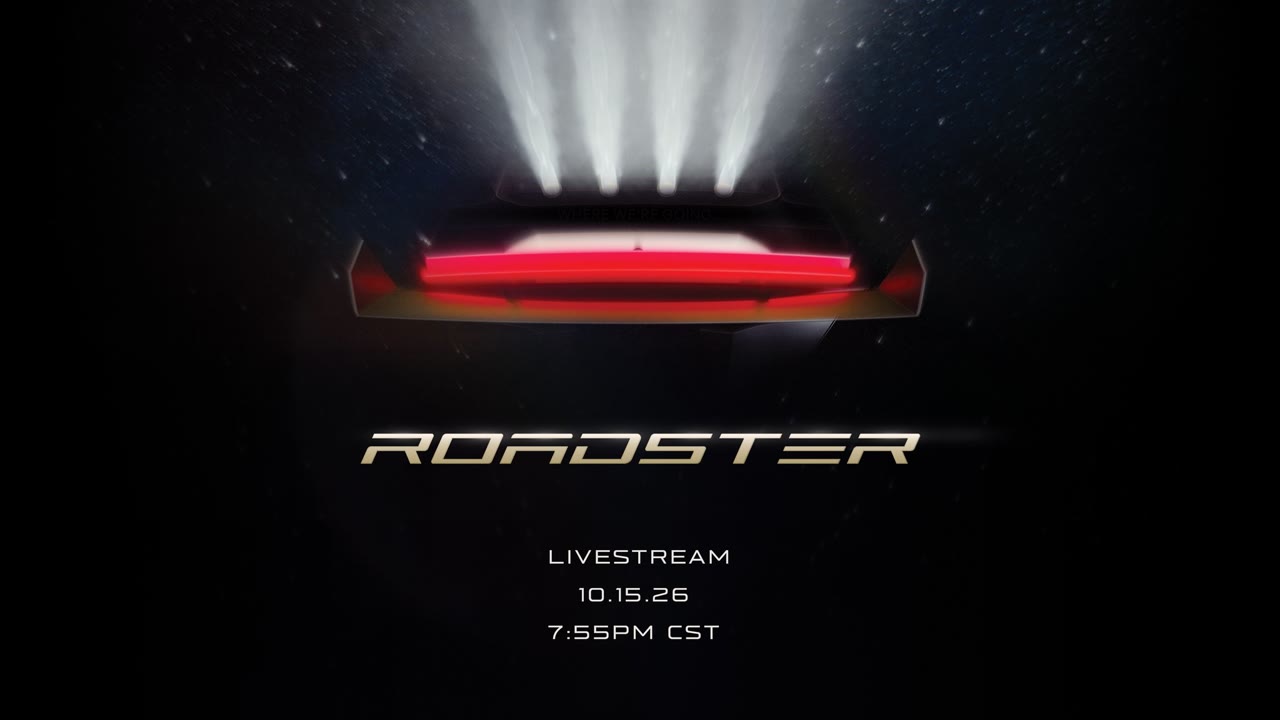
Tesla’s Roadster event went live at 01:55 Irish time on Friday, 7:55pm Thursday in Texas, and ran for under 30 minutes, The Verge reported. The full replay is on Tesla’s YouTube. It was held outdoors at the SpaceX test site in McGregor, near Waco, Texas, Engadget reported. The Verge described it as “more like a stunt show than a product reveal”, and that is fair. Most of the specs came afterwards, in a thread of posts from @Tesla and on tesla.com/roadster.
What the demo showed
The opening stunt answered the question Musk had been teasing for weeks. According to Engadget, the Roadster drove up a C-shaped ramp and stopped on the inverted section, hanging upside down. On a second run it left the top of the ramp, flipped, and its thrusters slowed it to a landing on the ground. When the door opened, an Optimus robot was in the driver’s seat. Engadget notes the stunts were programmed into the car, so no human was driving.
TechCrunch reported that the car also used its thrusters to lift itself over a Cybercab, a Cybertruck, a Tesla Semi, a Model Y and a Model 3 while moving. The Verge reported that Tesla claimed a 0.81-second 0–60 mph run on stage. Musk’s own summary on X afterwards: “Turns out the future does have flying cars.”
Turns out the future does have flying cars
— Elon Musk (@elonmusk) View the post on X
How it stays upside down, and how it flies
Two systems do the work, and Tesla described both. The first is a “multi-mode fan and ground sealing system” that pulls air out from under the car. Tesla says it creates enough suction to hold the vehicle upside down, even when stationary, with powered fans and active wings giving “massive downforce at zero speed.” In Track Mode the car lowers itself and the wings deploy. Tesla calls it “the best passive downforce package of any road car (approaching F1 levels!)”, with the wings moved by the actuators Tesla built for its Optimus robot.
The second is the SpaceX part: cold-gas thrusters. Tesla wrote that “every usable void in the car is packed with Carbon Fiber Overwrapped Pressure Vessels (COPVs)”, and that more stored gas means more flight time. Engineering VP Lars Moravy said on stage that the car uses 10 thrusters fed by 600 litres of compressed air, and that the tanks can be recharged, TechCrunch reported. Tesla says the thrusters use all-electric actuators that make micro adjustments within a fraction of a second to keep the car stable in the air.
The reason for thrusters at all is grip. Tesla’s argument is that every road car is limited by how hard its tyres can push on the road, and that the Roadster’s thruster system “generates 4–5x the force the tires can.” More force on the same mass means more acceleration, without relying on the tyres.
Roadster transforms in Track Mode
— Tesla (@Tesla) View the post on X
Three trims, and the numbers Tesla gave
Tesla listed three configurations on X and on its Roadster page:
- Performance, “road ready”, two seats. Active aerodynamics and the suction system. 0–60 mph in under 1.6 seconds.
- Thrust, “race ready”, two seats. Adds rear-mounted cold-gas thrusters. 0–60 mph in under 0.9 seconds.
- Rocket, “air ready”, one seat. Thrusters around the whole car for forward, upward and rotating movement. “So...yes, it can fly.” 0–60 mph in under 0.59 seconds.
Tesla quotes a range of more than 300 miles and a top speed of more than 230 mph for the Rocket. Its website adds that the Rocket is not available in all regions and carries the line “Not approved for public road use.”
Price, reservations and timing
Musk did not give a price on stage. He said production will start in 2028, according to TechCrunch and CNBC. Tesla’s reservation page asks for $5,000 up front, which is fully refundable, and a further $45,000 within 10 days, for a $50,000 reservation on the Performance car. The Thrust trim needs a $250,000 reservation, and the Rocket is invite only, Engadget and TechCrunch reported.
The design
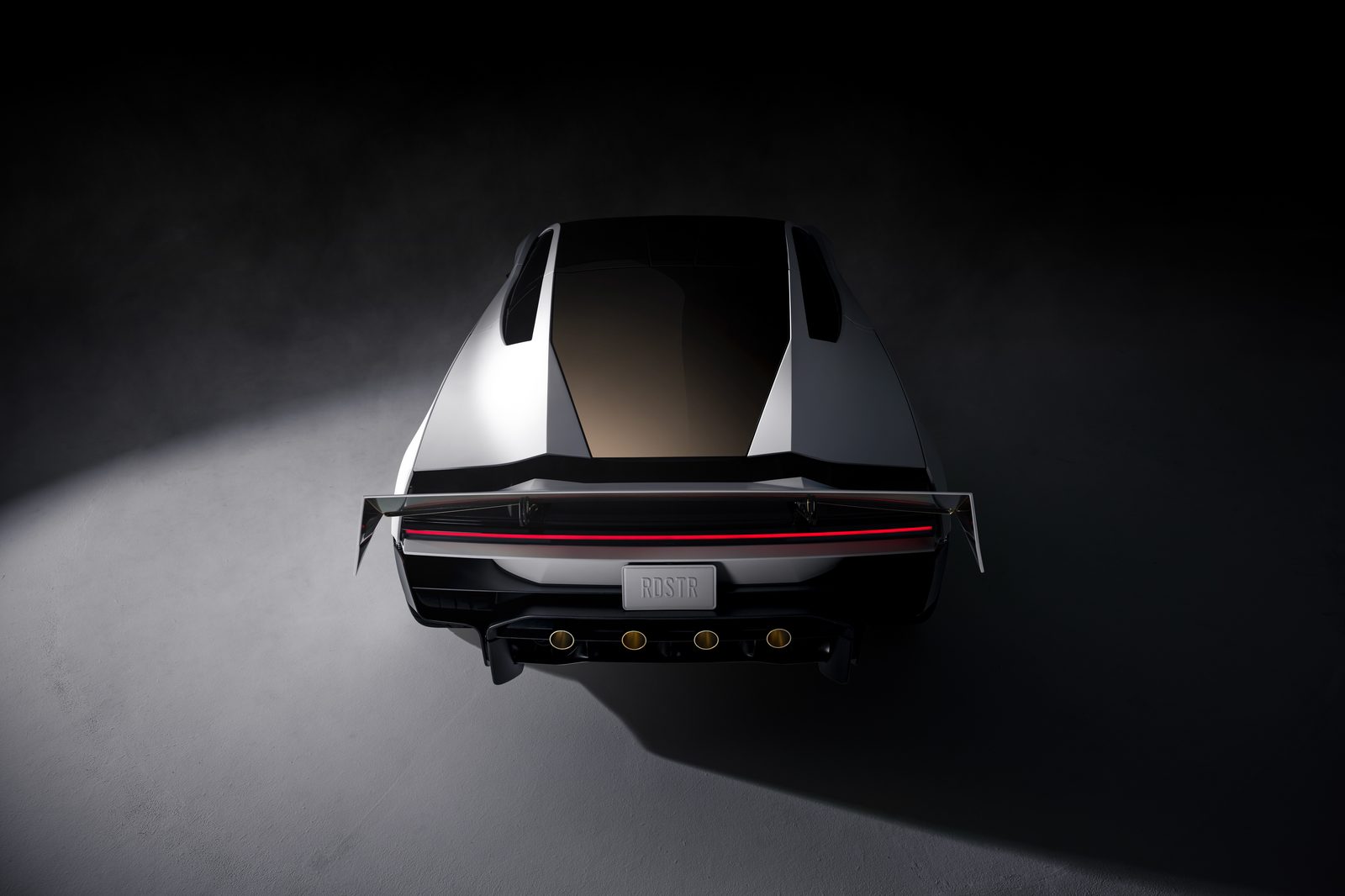
The car looks nothing like the red 2017 prototype. Tesla says the shape is inspired by the SR-71 and F-35 and follows the newer design language of the Cybertruck, Cybercab and Optimus. The headlights are hidden, a single taillight runs the full width, and the paint is a finish Tesla calls Ano White, based on coatings used to protect rockets. The glass has a gold tint meant to look like a spacesuit visor. Inside, Tesla lists an Ultrawhite cabin with grey microsuede, a yoke built for steer-by-wire, a centre touchscreen with two smaller displays in front of the driver, and a fixed seat with manual controls to save weight. Magnesium, titanium and carbon fibre are used throughout, according to Tesla.
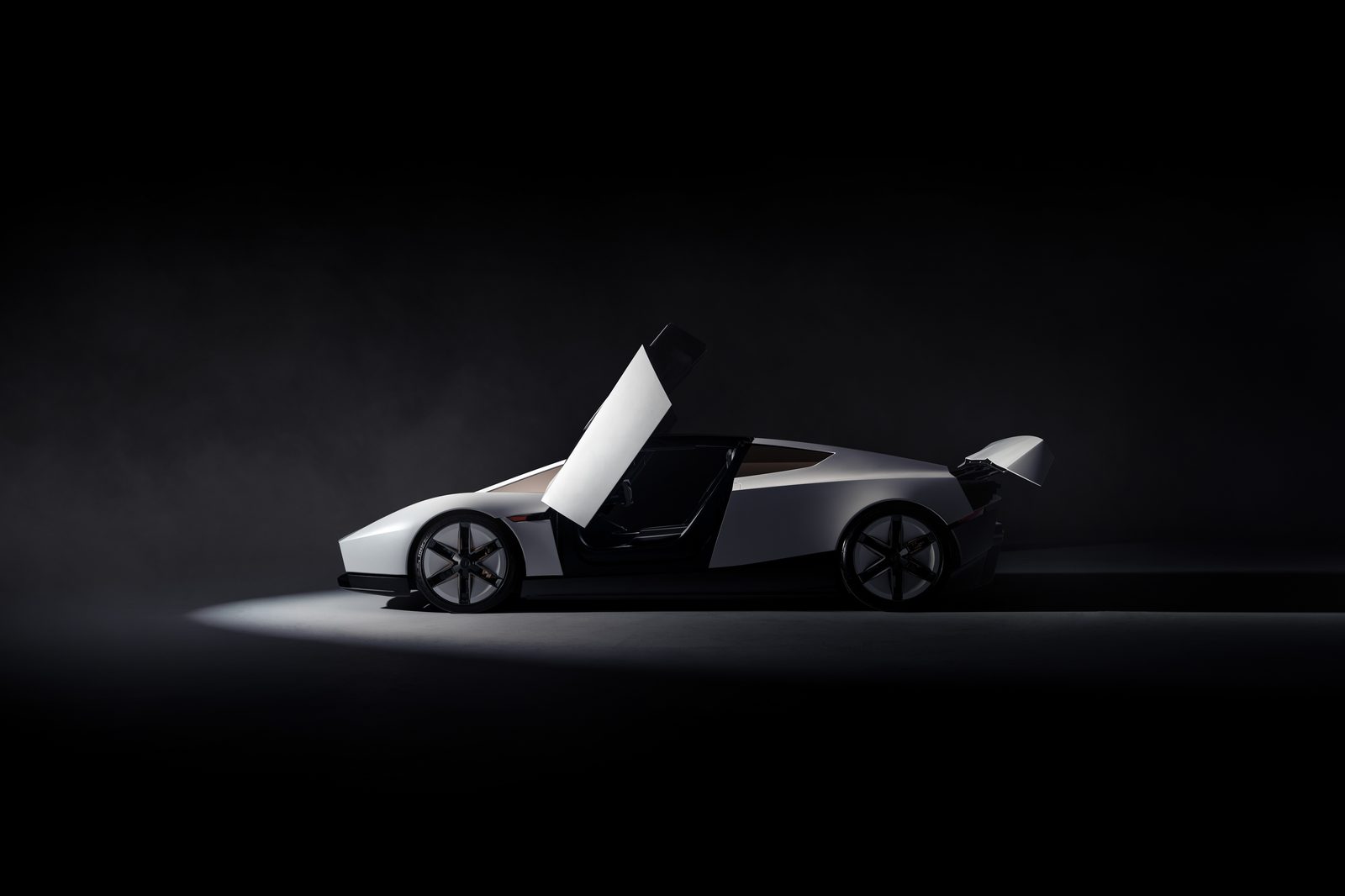
Musk called it “better than any James Bond car” on stage, and said “this will be the actual car that’s on the roads.” He also floated the idea that Tesla might try to jump the Snake River Canyon, where Evel Knievel made his famous rocket attempt, TechCrunch reported.
2017 promise vs 2026 reveal
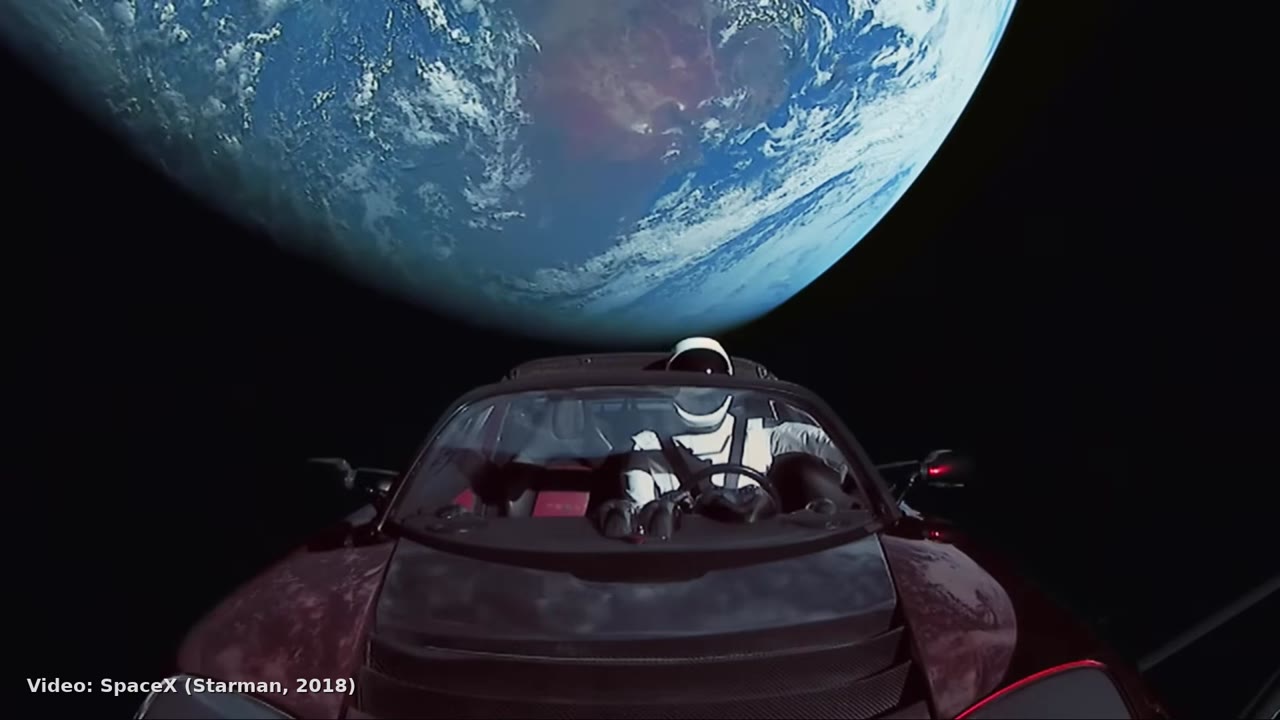
The second-generation Roadster first appeared as a surprise at the end of the Tesla Semi event in November 2017. The specs then were 0–60 mph in 1.9 seconds, a top speed over 250 mph, up to 620 miles of range, a $200,000 starting price and deliveries in 2020, The Verge recalls. Buyers paid $50,000 deposits, or $250,000 for one of 1,000 Founders Series cars. Musk added the SpaceX thruster package in June 2018. The car was then delayed in 2020, 2021, 2023 and 2024, TechCrunch counts, and this reveal itself moved from 1 October because of weather.
Side by side, the new car is quicker on Tesla’s numbers, but Tesla now quotes a range of more than 300 miles against the 620 miles promised in 2017, and production is set for 2028, eight years after the first target. That is why it sits on our Promise tracker as a missed deadline, even though the car is now real.
What it means
Our read, not Tesla’s: this was a halo-car night, not a sales night. Musk has said himself that the Roadster won’t move the needle much on revenue, TechCrunch noted, and CNBC wrote that it is unlikely to have any material financial impact. What it does show is Tesla and SpaceX engineering working in the same product, with SpaceX pressure vessels and thrusters and Optimus actuators all in one car. That matters for the wider story of how closely Musk’s companies work together.
The open questions are the ones that decide whether the Rocket is a product or a show car. Tesla hasn’t said how long a full tank of compressed air lasts in flight, how the car refills, what crash rules the pressure vessels meet, or where a flying car is allowed to fly. Its own website says the flight-capable trim isn’t approved for public roads. The final prices are also still to come.
Real life, baby
— Tesla (@Tesla) View the post on X
What happens next
Watch for final pricing, which Tesla has not announced, and whether the 2028 production date holds. Tesla’s Q3 earnings call on 21 October is the next chance for Musk to be asked about it. Background: our pre-event explainer on cold-gas thrusters and how Falcon 9 uses the same idea.
Explore the Roadster → Every angle, clip, trim and spec in one place.
I stayed up for it. A Roadster hanging upside down from a ramp was not on my bingo card for 2am on a Friday.
— @AlJR86