SpaceX · 14 Oct 2026
Tesla's Roadster reveal is tomorrow, and its wildest idea, cold-gas thrusters on a car, is the same trick a Falcon 9 booster uses to flip itself around in space
The livestream is Thursday 15 Oct at 8:55pm ET (5:55pm PT). The headline number people expect is 0-60 mph in about 1.1 seconds, which @elonmusk confirmed back in 2021 and called "very intense." But the part I keep coming back to is the SpaceX package.
THE ROADSTER PROMISE
In June 2018 Musk posted that the SpaceX option for the new Roadster would have "~10 small rocket thrusters arranged seamlessly around car" that "dramatically improve acceleration, top speed, braking & cornering. Maybe they will even allow a Tesla to fly." He later said they'd run on ultra-high-pressure air stored in a SpaceX COPV, a carbon-fibre-wrapped tank, in place of the rear seats, refilled by an electric pump.
That sounds like a joke until you look at what SpaceX already does every few days with the same kind of hardware.
WHAT A COLD-GAS THRUSTER IS
Nothing burns. There's no fuel and no flame. It's a tank of very high-pressure gas, a valve and a nozzle. Open the valve and the gas rushes out, and Newton's third law pushes the vehicle the other way. The gas expands and cools so fast that it shows up as those white puffs you see on the webcasts. It's simple and reliable, and it doesn't leave a mess on anything nearby, which is why rockets use it.
HOW A FALCON 9 FLIPS
At the top of the booster, by the interstage, there are two pods of nitrogen thrusters, four nozzles each, eight in total. They sit as far from the booster's centre of mass as they can get, so a small push gives a lot of turning force. Between them they control pitch, yaw and roll.
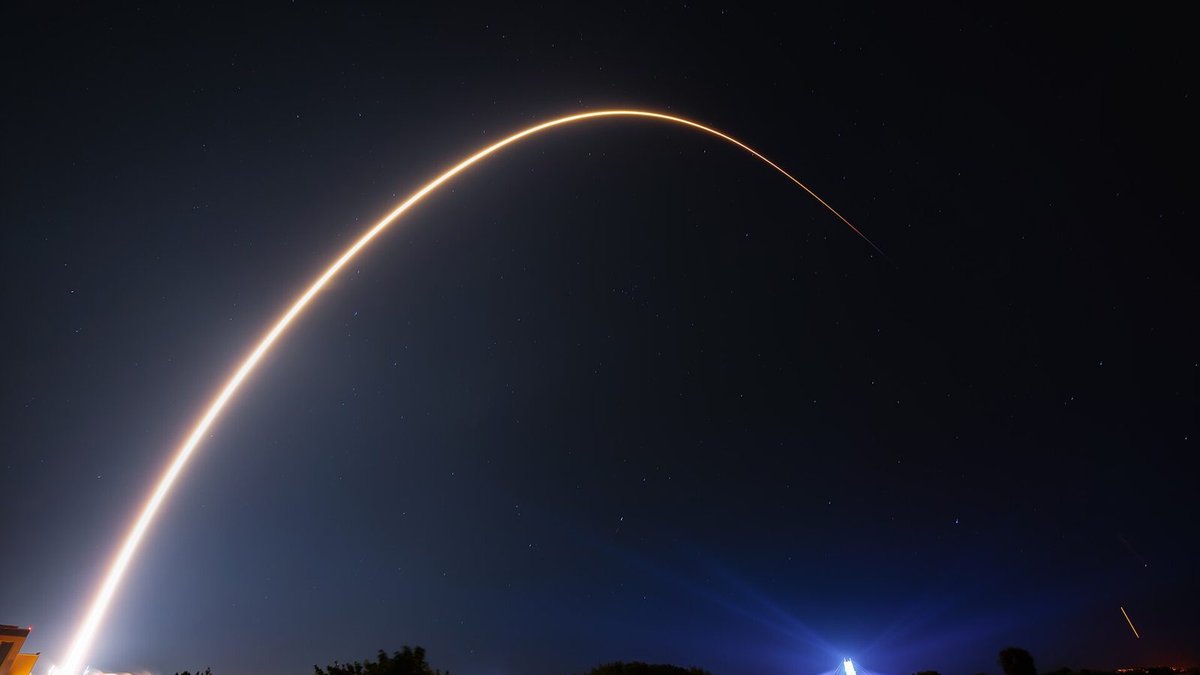
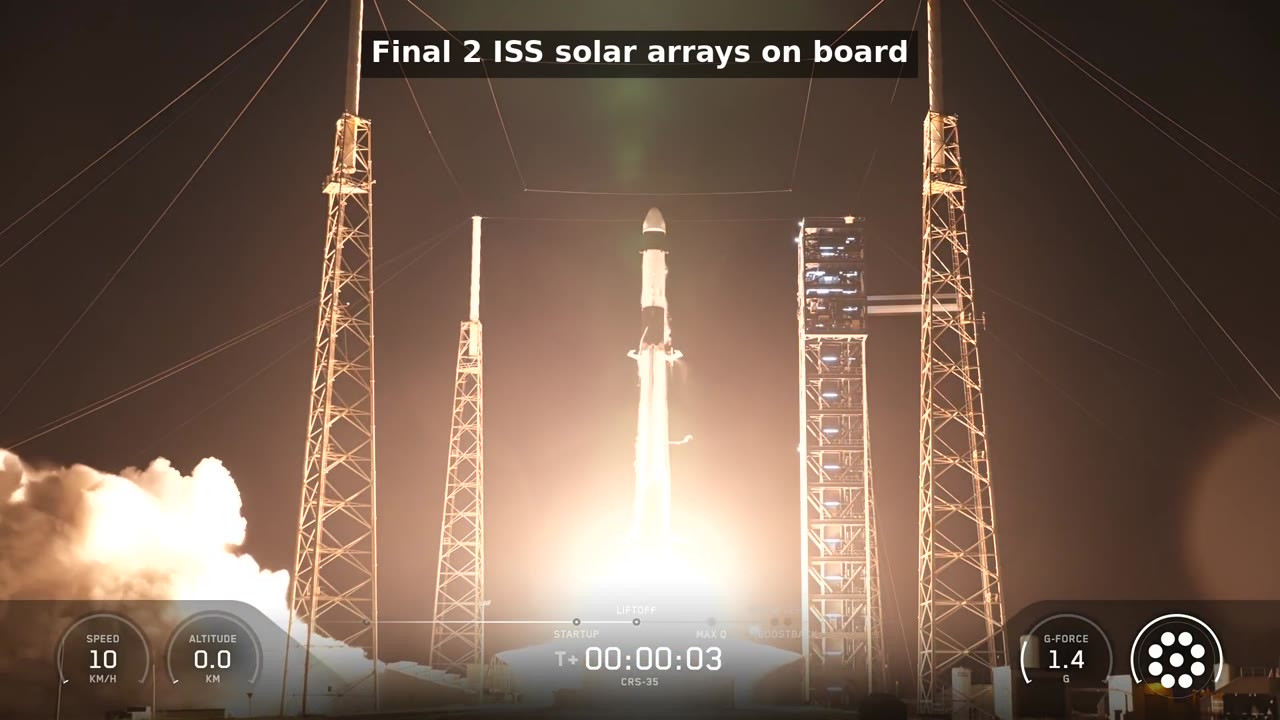
A couple of minutes after liftoff the booster separates from the second stage at around 70 km up. It's still climbing, it's flying backwards from where it needs to go, and there's almost no air. Grid fins are useless up there because there's nothing for them to bite on. So the nitrogen thrusters fire and swing the whole 40-plus-metre stage around until the engines face the direction of travel.
For a landing back at the launch site, three engines then light for the boostback burn and reverse its course. For a droneship landing it mostly keeps coasting downrange, and the thrusters hold it steady while it falls.
THE HANDOFF
Entry burn: engines relight high up to slow it before the thick air.
Grid fins: once there's air, 4 titanium grid fins take over steering, like rudders on a falling skyscraper.
Landing burn: the engines gimbal, tilting on their mounts to steer the thrust. In the last seconds the fins, the gimbaling engines and the thrusters are all working at once.
Legs: 4 legs swing out at the very end, spanning about 60 feet.
Each Merlin makes about 190,000 pounds of thrust at sea level, per @SpaceX.
WHY IT CAN'T HOVER
Even one Merlin at its lowest throttle pushes harder than the near-empty booster weighs. Musk put it simply in 2015: "Even w 1 lit, it can't hover, so always land at high g." Start the burn too early and it stops in mid-air and starts climbing. Start too late and it hits the deck. Engineers call it a hoverslam, and it has to reach zero speed exactly at the deck.
THE FINS CAUGHT FIRE
Early grid fins were aluminium with a heat-shield coating, and onboard video showed some burning on the way down. In 2017 Musk switched to fins "cast & cut" from a single piece of titanium that "can take reentry heat with no shielding" and "can be reused indefinitely with no touch ups."
IT DIDN'T WORK AT FIRST
January 2015, CRS-5: the grid fins ran out of hydraulic fluid and the booster hit the droneship at about 45 degrees. Musk called it a "full RUD."
April 2015, CRS-6: it reached the deck, drifting sideways, and toppled.
December 21, 2015, Orbcomm: the first orbital-class booster ever to land.
January 2016, Jason-3: a soft landing, then a leg latch failed and it tipped. "At least the pieces were bigger this time," Musk said.
THE SHIPS AND THE NUMBERS
The droneships hold position by themselves, with no one on deck. Musk named them after ships in Iain M. Banks' Culture novels: Of Course I Still Love You (in this video), Just Read the Instructions and A Shortfall of Gravitas. The fleet leader, B1067, has flown and landed 37 times. Public launch logs count about 665 successful Falcon landings out of 678 attempts. Musk's reason it's worth it is that propellant is only about 0.3% of a launch's cost, and the booster is up to 70%.
NOW PUT THAT ON A CAR (speculation)
Speculation from here, because Tesla hasn't confirmed the package will be shown tomorrow. Here's each job the thrusters do on a Falcon 9, and what the same job could mean on a Roadster.
Flipping in thin air. On Falcon 9 they rotate a 40-plus-metre stage where fins have nothing to grip. On a car, the closest thing is yaw control: little bursts that rotate the car mid-corner or catch a slide, without waiting on the tyres.
Steering when grip runs out. The booster leans on thrusters where its fins can't work. A car's grip runs out at the tyres, which is what caps a launch at around 1.1 seconds. Rear-facing thrusters add push that doesn't care about grip at all.
Holding it steady. While the booster falls it holds its attitude with tiny corrections. On a car the same idea could steady it over a crest or under hard braking, with forward-facing jets helping it stop.
Fighting physics in milliseconds. Falcon 9's computer fires thrusters, fins and gimballed engines all at once, with nobody flying it. A Roadster would need exactly that. Even a tiny unmatched puff at 200 mph could be dangerous, so the software is the real product.
Pressing down instead of lifting off. Firing upwards, thrusters could push the car into the road for more grip without a giant wing.
The gap is size. A Merlin makes about 190,000 pounds of thrust, while car thrusters would run on a tank of air in place of the rear seats. The Roadster weighs a small fraction of even an empty booster, so it would need far less, but a tank of air doesn't hold much energy. Any "flight" would be a short hop, not a hover.
I'll be watching tomorrow to see how much of 2018 survived.
Source clips: @SpaceX stage separation and flip · @SpaceX landing on Of Course I Still Love You
Related: Roadster livestream details · Roadster cold-gas thrusters