SpaceX · Dragon · 15 Oct 2026
Cargo Dragon docks with the space station, bringing its last new solar arrays
SpaceX’s 35th resupply run for NASA latched onto the International Space Station about half an hour ahead of schedule on Thursday, delivering more than 6,300 pounds of cargo, a stack of medical experiments and the final pair of roll-out solar arrays the station has been waiting on.
LIVE: NASA’s rendezvous and docking coverage of SpaceX’s CRS-35 cargo Dragon.
— NASA (@NASA) View the post on X
SpaceX’s cargo Dragon is now attached to the International Space Station. NASA says the spacecraft docked on its own to the space-facing port of the station’s Harmony module at 10:27am ET (7:27am PT) on Thursday, beating the 11am ET (8am PT) target that NASA and SpaceX had published before launch.
The last few minutes played out live on X. At 10:24am ET (7:24am PT), @SpaceX posted that Dragon was 10 meters from the station and about to start its docking sequence. A few minutes later it followed up with “Docking confirmed”, and the @Space_Station account shared a photo of the capsule closing in with its nose cone swung open.

Two days to catch the station
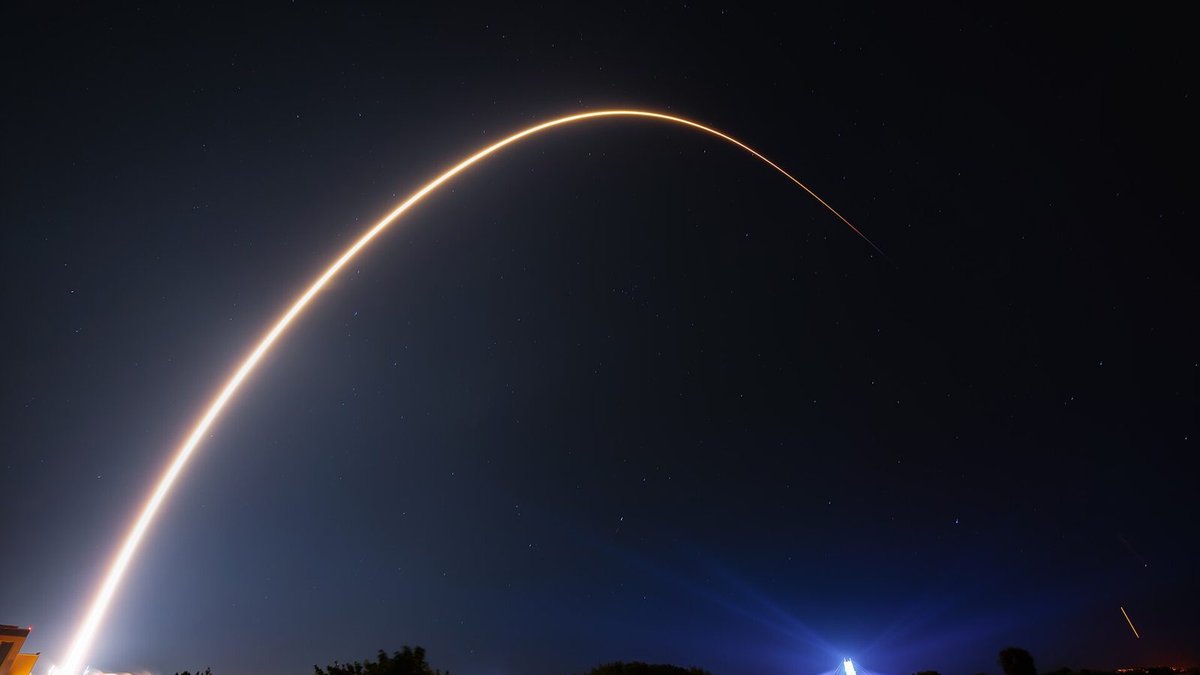
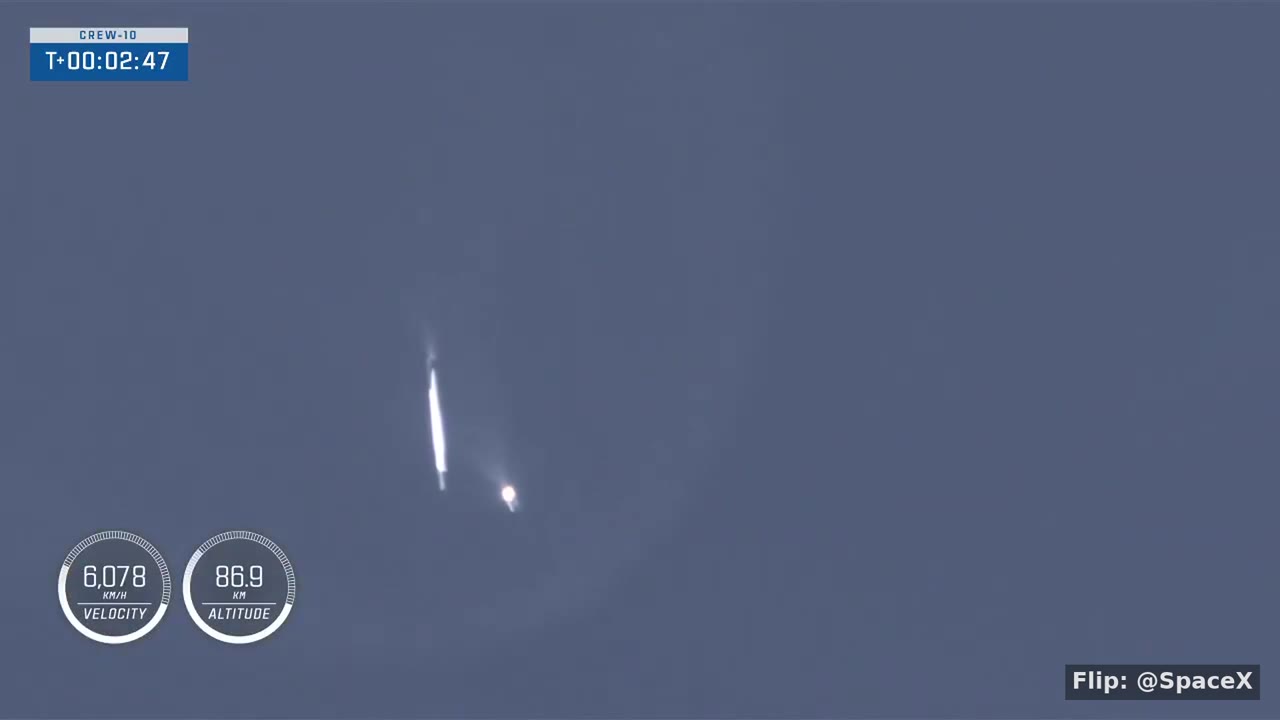
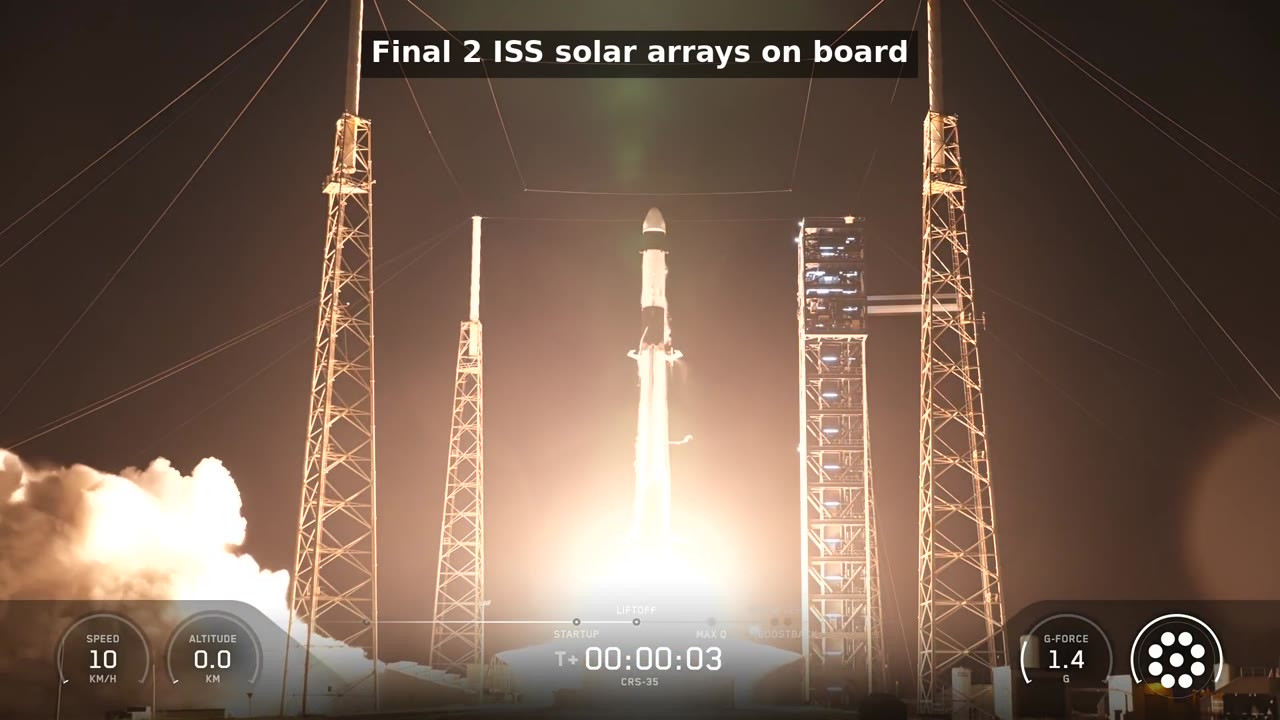
This is the mission that lit up the East Coast sky on Tuesday. Falcon 9 lifted off from Space Launch Complex 40 at Cape Canaveral Space Force Station at 6:33am ET (3:33am PT) on 13 October. SpaceX said the booster was flying for the eighth time, after earlier missions including KF-01, IMAP, NROL-77, GPS III-9, CRS-34 and NROL-95. The pre-dawn timing turned the exhaust plume into a glowing “space jellyfish” that people saw from Florida up the coast, as Space.com reported.
From there Dragon spent roughly two days raising and fine-tuning its orbit with a series of engine burns. SpaceX’s mission page put the trip at about 52 hours. Cargo Dragon has no crew on board, so the whole approach and docking ran automatically. NASA said on Wednesday that flight engineers Anil Menon of NASA and Joshua Kutryk of the Canadian Space Agency would be on duty to monitor the arrival.
What’s inside
The headline item is the last pair of ISS Roll-Out Solar Arrays, known as IROSAs. Dragon has flown up every one of these new wings, and this delivery finishes the set. NASA says the extra power will support research, day-to-day operations and, eventually, the station’s controlled deorbit at the end of its life. Astronauts will install the arrays during spacewalks planned for later this fall. (I covered the launch and how these wings work in Tuesday’s dispatch.)
The science manifest leans heavily toward health. According to NASA, Dragon carried:
- Hardware to manufacture artificial retinas in microgravity, which NASA says could one day help restore vision for patients on Earth.
- 3D heart tissue models aimed at large-scale drug testing on future missions.
- Brain organoids, tiny lab-grown models of human brain tissue, that could point to treatment targets for Alzheimer’s, Parkinson’s and multiple sclerosis.
- Materials for studying how a new type of glass forms without gravity.
- A crop disease study, plus the first test of a compact microplate reader that checks biomarkers like antibodies, antigens and proteins, which NASA hopes will speed up astronaut health checks.
- The fourth and final planned round of a study tracking how antibiotic-resistant bacteria survive and evolve on the station, using samples astronauts swab from its surfaces.
The rest of the more than 6,300 pounds is the usual mix of food, supplies and equipment for the Expedition 75 crew.
What happens next
Once the hatch is open, the crew can start unloading. NASA says Dragon will stay attached until mid-November, when it will be packed with time-critical research and cargo, undock, and splash down off the coast of California. That return trip is a big part of Dragon’s value. Some cargo ships are filled with trash and burn up on reentry, but Dragon comes home in one piece, so experiments can be back in scientists’ hands soon after splashdown.
Speculation
The next milestone to watch is the IROSA spacewalks. NASA has only said “later this fall,” with no dates yet. Once both wings are up, the station’s power upgrade is complete, which matters more as NASA plans for the station’s final years and its handover to commercial stations. That is my read on the timeline, not something NASA has announced.
Sources: NASA space station blog, 13–15 Oct 2026; NASA Science CRS-35 research overview, 12 Oct 2026; SpaceX CRS-35 mission page; posts by @SpaceX and @Space_Station on 15 Oct 2026; Space.com launch coverage. Video by NASA (@NASA); image by NASA.
Thirty-five resupply missions in, a robotic spaceship docking half an hour early barely makes the news. That says a lot about how routine SpaceX has made this.
— @AlJR86