Tesla · 14 Oct 2026
The Tesla dream scenario: robots, cabs with no wheel, a rocket-assisted Roadster and a truck for Mars
On the eve of the Roadster reveal, every piece of Tesla's and SpaceX's wildest roadmap already has a real starting point. Here is where each one stands, and how far the dream could run if it all lands.
Tesla goes into Thursday night with more moving parts than at any point in its history. A humanoid robot line is being fitted out in California, a car with no steering wheel is carrying paying riders in Texas, and a Roadster that has been promised since 2017 finally gets its public reveal. The livestream starts on Thursday 15 October at 8:55pm ET (5:55pm PT).
Each of these projects is easy to dismiss on its own. Taken together, and set next to what SpaceX is doing a few hundred miles down the Gulf coast, they look like one plan. This piece separates what is real today from what is still a dream, and labels the dream clearly.
Where things actually stand
Optimus: a line sized for a million
Tesla is converting floor space at Fremont that used to build the Model S and Model X into an Optimus production line. Elon Musk (@elonmusk) says it is designed for about one million robots a year, with a second line at Giga Texas aimed at a long-term ten million. He has also been blunt that the ramp will be “agonizingly slow” at first, with high-volume output targeted for around summer 2027. Capacity on paper is not output, and nobody outside Tesla knows yet how many robots will actually ship next year.
Cybercab: the car with nothing to hold
Public Cybercab rides began in Austin on 4 September. About a month later Tesla’s @robotaxi account said more than 300 of the two-seaters were serving the city, roughly eight times the launch fleet. That figure is Tesla’s own; Texas DMV registration records published since point the same way. Ashok Elluswamy (@aelluswamy), who leads Tesla’s AI software, has said only “Dallas soon” about the next city.
Robotaxi: six cities, by the trackers’ count
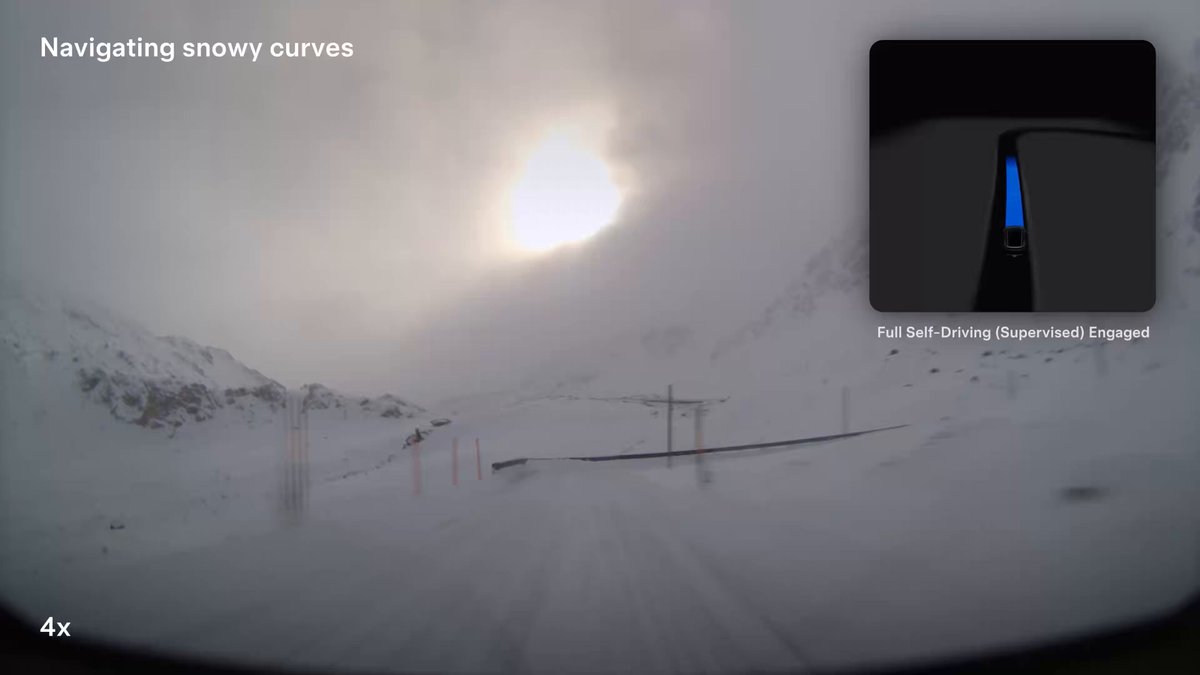
Community trackers list driverless Robotaxi service in Austin, Dallas, Houston, Miami, Orlando and Tampa, and estimate the fleet has passed one million unsupervised miles. Tesla has not published an official mileage figure, so treat both numbers as independent estimates rather than company data.
Starship: catching what comes home
Two years ago this week, on Flight 5 in October 2024, SpaceX caught a Super Heavy booster with the arms of its launch tower for the first time, and the cheer from the company’s own staff became one of the defining clips of the decade. On Flight 13, SpaceX flew the ship through the kind of banking manoeuvre it would need to return to its launch site. Full reuse of both stages is the condition for almost everything below.
The background: why it is one bet, not four
The thread connecting all of this is the same one that made Falcon 9 work: hardware that is cheap because it is built at scale and used over and over, run by software that improves with every mile or every flight. Tesla’s fleet gathers the driving data that trains its autonomy software. That same AI work underpins Optimus. SpaceX’s reusable rockets are the only realistic way to move heavy hardware, robots included, off Earth at a sensible price. For holders of $TSLA and $SPCX that is the whole case in one sentence, and also the whole risk: if scale does not arrive, the economics do not either.
The dream scenario (speculation)
Everything in this section is my speculation. None of it is promised by Tesla or SpaceX.
A city with no steering wheels
Picture Austin a few years from now. You tap your phone, a gold two-seater with butterfly doors pulls up, and nobody is in it. Cars that rarely need to park free up garages and kerbside space, and some of that land gets turned into homes. The commute becomes twenty-five minutes of something on a screen. The only real difference from today is the number of cars.
A million pairs of hands
Tesla has described Optimus as potentially its biggest product ever, and Musk has said he thinks it will end up as most of the company’s value. Run the Fremont line at full speed and you get robots doing the dull, the dangerous and the overnight work: unloading lorries, stocking shelves, and eventually helping build the next batch of Optimus. If even half of that comes true, the car business is the warm-up act.
A Roadster that leaves the ground, briefly
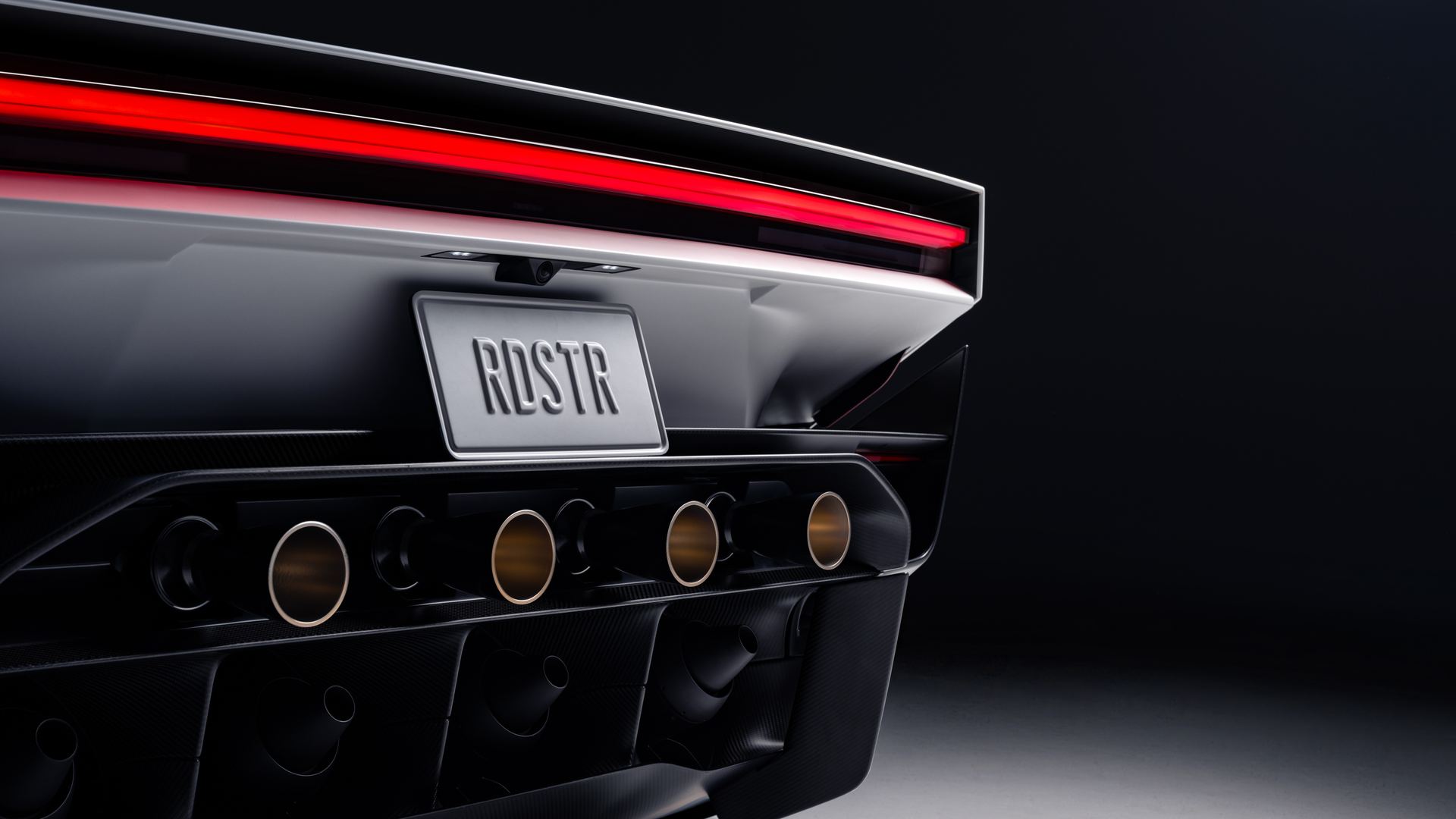
The expected headline for Thursday is 0–60 mph in about 1.1 seconds. In June 2018 Musk said an optional SpaceX package would add “~10 small rocket thrusters arranged seamlessly around car,” later describing them as running on compressed air from a SpaceX tank. That is the same principle as the cold-gas nitrogen thrusters that flip a Falcon 9 booster in near-vacuum. A tank of air stores little energy, so the realistic version of “flight” is a short hop. The realistic version of everything else is acceleration, braking and cornering no tyre could deliver on its own. Tesla has not confirmed the package will appear on Thursday.
A truck on Mars
Musk’s Mars plans have long been robots first: uncrewed Starships delivering machines to build power and find water before people arrive. On 21 November 2019, hours before the Cybertruck unveiling, he posted that a “pressurized edition” would be the “official truck of Mars.” SpaceX has since put the Moon first and speaks of starting a Mars city in five to seven years. The image writes itself anyway: a Starship ramp dropping, Optimus driving a Cybertruck onto red dirt, and Tesla batteries charging off solar panels nearby.
The full source video
The full Cybercab rider-experience film from Tesla, which our edit borrows from, is below. Credit: @Tesla.
Tesla Cybercab video
— Tesla (@Tesla) View the post on X
And the moment that started the catching era, SpaceX’s own Flight 5 webcast. Credit: @SpaceX.
Starship Flight 5 booster catch
— SpaceX (@SpaceX) View the post on X
What happens next
Thursday’s livestream is the first test of how much of the 2018 promise survives: watch for the 0–60 figure, the price, a delivery date and any sign of thrusters. After that, the numbers to follow are Cybercab fleet counts in Austin, a confirmed launch in Dallas, Optimus output from Fremont through 2027, and Starship’s next steps towards catching a ship as well as a booster.
None of the dream is promised. Every starting point is real, and that is why I am watching on Thursday night.
— @AlJR86