SpaceX · Starlink · 16 Oct 2026
EU moves to fast-track Project Bromo, Europe’s SpaceX-scale satellite champion
Bloomberg reports Brussels is preparing a fast antitrust path for the Airbus–Leonardo–Thales space merger. The company is still on paper — about €6.5 billion in revenue and 25,000 staff — while Starlink already flies more than 11,000 satellites. Here is the scale gap, the timeline, and what to watch.

On Thursday, Bloomberg reported that the European Union is working toward a fast-track antitrust review of Project Bromo — the planned satellite joint venture between Airbus SE, Leonardo SpA and Thales SA that European officials have pitched as an answer to SpaceX and Starlink. A person familiar with the talks told Bloomberg the companies have not filed yet, but EU officials expect a formal notification in the coming weeks. Airbus, Leonardo and the European Commission declined to comment; a Thales spokesperson did not immediately reply.
JUST IN: EU prepares to accelerate development of Starlink satellite competitor, per Bloomberg
— Kalshi (@Kalshi) October 16, 2026
X post: @Kalshi summarizing the Bloomberg report, 16 Oct 2026 (~10:00pm ET / 7:00pm PT on the 15th).
What Project Bromo actually is
This is not a brand-new idea. On 23 October 2025, Airbus, Leonardo and Thales signed a memorandum of understanding to fold their space businesses into one company. Airbus would own 35%; Leonardo and Thales 32.5% each, under joint control. The combined entity would employ about 25,000 people across Europe, with about €6.5 billion in 2024 pro-forma revenue and an order backlog of more than three years of sales. The parents said the new company could be operational in 2027, subject to regulatory approvals and other closing conditions. Launchers stay out of the deal: the MoU covers satellites, space systems and services.
Thursday’s Bloomberg story is about the regulatory path, not a new industrial plan. After roughly a year of pre-notification talks aimed at clearing competition concerns before filing, Brussels is said to be ready to move quickly once the paperwork lands. A Phase 1 review can finish in a little over a month if the parties offer remedies such as asset sales. If concerns remain, the Commission can open a deeper Phase 2 probe that lasts several months.
Politics on both sides of the file
Commission President Ursula von der Leyen has held Project Bromo up as the kind of “European champion” the bloc wants in the space economy. Competition Commissioner Teresa Ribera has pushed back on any idea of a rubber stamp. In a Bloomberg TV interview cited by the report, she said public support from the Commission president “does not mean that we will not apply and enforce our own regulations.” Unions and suppliers have also raised job and competition worries since the MoU. So the “fast track” label is best read as: pre-work is advanced, a Phase 1 clearance is plausible — not that approval is guaranteed.
Europe is trying to build a SpaceX-class industrial champion on a 2027 clock. Starlink already spent that decade putting more than 11,000 satellites into orbit.
The scale comparison that matters
Put the MoU numbers next to SpaceX’s flying hardware and the gap is obvious:
- People and cash flow: Bromo’s planned ~25,000 employees and ~€6.5 billion revenue are real industrial scale by European standards. They describe a manufacturer and services group, not a finished constellation.
- Satellites already up: Jonathan McDowell’s catalogue, as tracked on our Starlink tracker, shows more than 13,000 Starlinks launched and about 11,100 still in orbit, with roughly 9,700 counted as operational. Our earlier two-thirds piece put SpaceX at about two of every three working satellites on Earth.
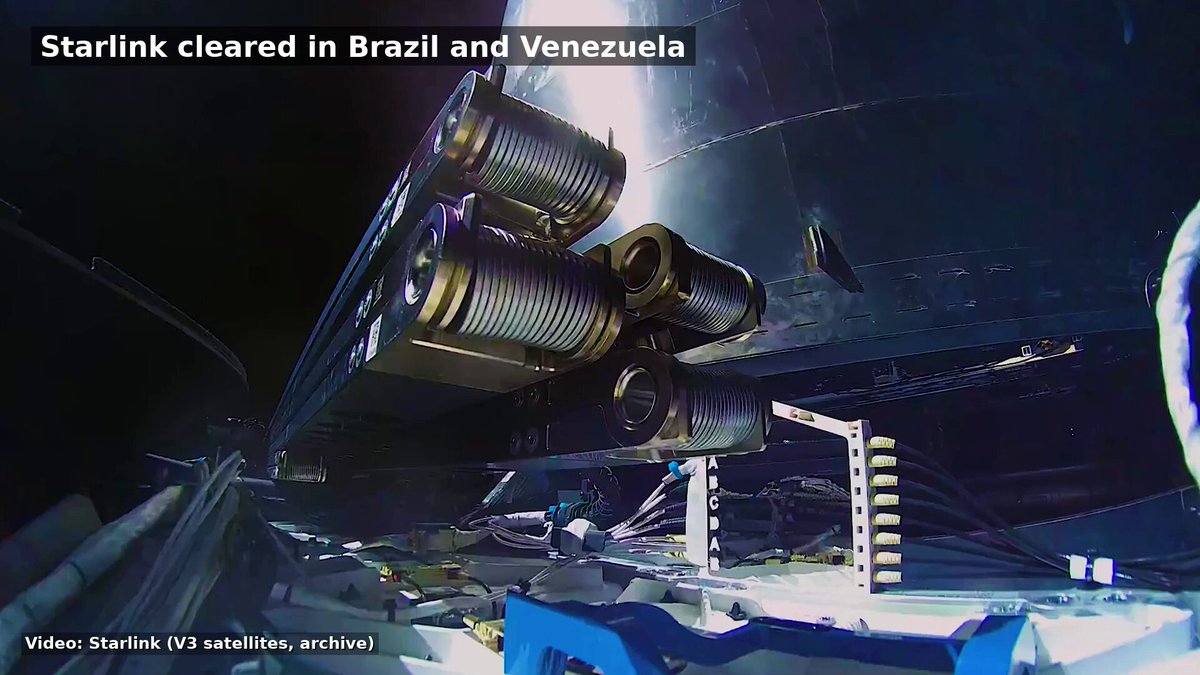
- Timeline: Bromo’s parents aim for operations in 2027. Starlink has been stacking Falcon 9 flights for years and has already started flying larger V3 birds off Starship. Even if Brussels clears Bromo in weeks, the new company still has to close, integrate three cultures, and then win and build programs.
- What “rival” means: The MoU’s own language is about strategic autonomy — telecom, navigation, Earth observation, science, exploration and national security — and about being a trusted partner for sovereign European programmes. That is a wider industrial brief than “build another Starlink.” Consumer broadband for every phone is still Starlink’s (and Starlink Mobile’s) home turf.
So the fair comparison is not “will Bromo’s first satellite outshine Starlink next year.” It is whether Europe can create one contractor with enough mass to compete on big sovereign and export programmes while Starlink keeps widening the LEO broadband lead. On today’s numbers, the manufacturing merger is catching up on org charts; the constellation race is not close.
What to watch next
- The formal filing. Bloomberg’s source expects notification in the coming weeks. Until that lands, the Phase 1 clock has not started.
- Remedies. Asset sales or other fixes would extend Phase 1 but still keep a fast path open. A Phase 2 probe would push closing deeper into 2027.
- 2027 operations. That is the date in the Airbus MoU. Watch whether clearance, works councils and national approvals leave enough time to hit it.
- Starlink’s cadence. Every Falcon and Starship flight that adds capacity raises the bar Bromo is measured against, even if Bromo’s job is partly different (sovereign systems, not only mass-market broadband).
My read: Thursday’s report is a real policy signal. Europe wants a single space champion and is willing to bend its merger culture to get one. That matters for Airbus, Leonardo and Thales shareholders, and for European governments that want less dependence on US providers. It does not, by itself, put a second mega-constellation next to Starlink. For that, someone still has to build, launch and operate at SpaceX’s rate — and Project Bromo has not filed its paperwork yet.
Sources: Bloomberg Law / Daniel Basteiro (15 Oct 2026); Investing.com summary of Bloomberg (15 Oct, 2:01pm ET); Airbus–Leonardo–Thales MoU press release (23 Oct 2025); Jonathan McDowell Starlink statistics; image: SpaceX / Starlink.
— @AlJR86