SpaceX · Starlink · 17 Nov 2026
Ramaphosa tells Musk to follow South Africa's rules. Musk calls them racist. Here's where Starlink's licence stands
South Africa's president used a stage in California on Monday to say Starlink has to "subscribe to the policies of the country." Elon Musk answered on X that South Africa "is now super racist against Whites and Asians." Behind the shouting is a 30% ownership rule, a policy fix the regulator says it can't apply, and a court case filed last week.
On this page
The editor holds Tesla and SpaceX shares. Supercharged Daily is independent and not affiliated with either company. Nothing here is financial advice.
"I have met Elon Musk in the past, and I've been awed by his brilliance. But I'd also like to chat to him about remembering his country," South African President Cyril Ramaphosa tells @jonkarl.
— Semafor (@semafor) November 16, 2026
What was said
Cyril Ramaphosa is leading a South African delegation to Silicon Valley this week to court AI investment, ITWeb reports. Interviewed by ABC News' Jonathan Karl at Semafor's Silicon Valley & The World event on Monday, 16 Nov, he said he has been "awed by his brilliance" but wants Musk to remember "his country." On Starlink, per The Next Web, he said: "All countries have policies in terms of how they admit companies to operate. The United States has the same. When you want to come and operate here, you've got to subscribe to the policies of the country." He also said the apartheid government spent 12 rand on Musk's education for every one rand it spent on his own.
Musk replied to Semafor's clip at 9:09 p.m. ET (6:09 p.m. PT) the same day:
South Africa is now super racist against Whites and Asians
— Elon Musk (@elonmusk) November 16, 2026
The rule in dispute
To sell internet service directly, Starlink needs individual network and service licences from ICASA, South Africa's telecoms regulator. The Electronic Communications Act requires individual licence holders to be at least 30% owned by historically disadvantaged groups, ICASA says. SpaceX has refused to give up 30% of a local Starlink company.
There is a known workaround. Equity-equivalent investment programs (EEIPs) let a multinational spend on things like skills and small-business support instead of selling shares. They already exist in South Africa's ICT empowerment code, and HP, Microsoft, IBM, Dell, Samsung and Amazon Web Services have used them, per ITWeb. Starlink's offer, covered in my earlier piece, was along these lines: about R500 million to connect more than 5,000 rural schools.
Where it stands, in order
| Date | What happened | Status |
|---|---|---|
| Dec 2025 | Communications minister Solly Malatsi directs ICASA to consider EEIPs as an alternative to the 30% rule | Policy issued |
| Apr 2026 | Government tables an Electronic Communications Amendment Bill | Doesn't touch ownership, per TechCentral |
| 13 May 2026 | ICASA says applying EEIPs fully would need Parliament to amend the Act | Blocked at regulator |
| 9 Nov 2026 | Business group Sakeliga asks the Pretoria High Court to overturn ICASA's May decision and rule that the Act sets no fixed 30% precondition | Filed; not heard |
| 16 Nov 2026 | Ramaphosa says Starlink must follow existing policy | No change announced |
So the president's own communications minister has tried to open the EEIP route, and the regulator says the law doesn't let it. That leaves Parliament or the court. Starlink, meanwhile, already operates in several of South Africa's neighbors, ITWeb notes.
My read
Ramaphosa's comments don't change anything on paper. The policy route he could back already exists in his own government's code and is stuck at ICASA, and the court case is the only live way forward. Musk's reply makes a deal politically harder. Should Starlink take the EEIP route on any terms it can get, or keep fighting? Tell me below.
— Alex R
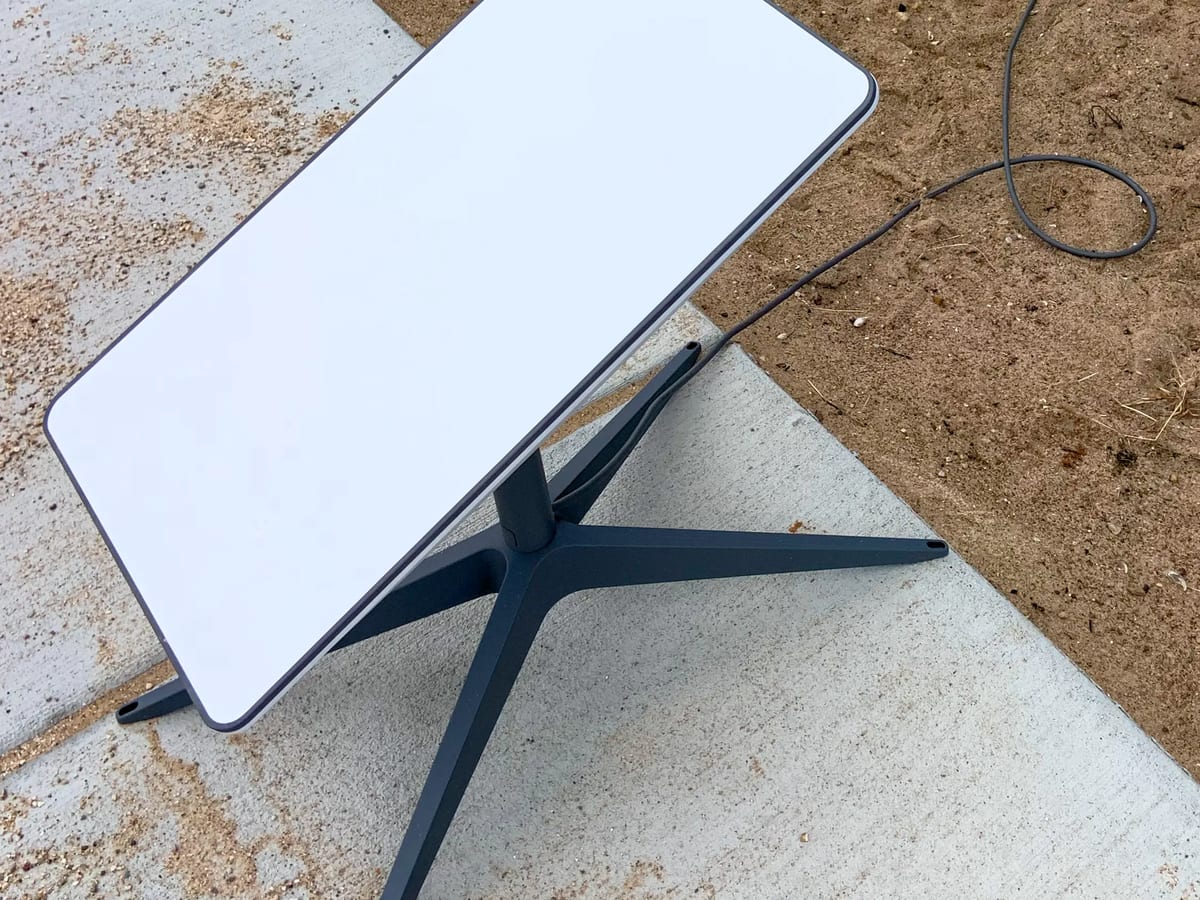
Sources: Semafor on X, 16 Nov 2026; Elon Musk on X, 16 Nov 2026; Ramaphosa quotes via The Next Web and ITWeb; ICASA statement via ITWeb; Sakeliga court filing via TechCentral; Starlink's schools offer as covered in my 22 Oct piece. Card photo: BugWarp, CC BY-SA 4.0, via Wikimedia Commons (taken in Argentina, not South Africa; same image as the 22 Oct piece).