SpaceX · 24 Oct 2026
One customer paid a third of SpaceX's bills last quarter. Here's what the 10-Q adds to that $4.4 billion profit
SpaceX's earnings release on Tuesday led with a $4.4 billion profit. The full quarterly report it filed with the SEC two days later has more detail. One unnamed customer in its AI business paid 34.5% of all revenue, about $5 billion by my math. Roughly $1 billion of the profit came from two items that won't repeat. And two other Musk-linked companies show up in the accounts.
On this page

Quick recap
SpaceX reported third-quarter results on Tuesday, October 20: $14.58 billion in revenue and $4.40 billion in net income. We covered the headline numbers in SpaceX Q3 results. On Thursday, October 22, SpaceX filed its full Form 10-Q for the quarter ended September 30. A 10-Q is the long version, with the footnotes, and that's where the numbers below come from.
1. One customer: 34.5% of revenue
Public companies have to list any customer worth more than 10% of revenue, but they don't have to name it. SpaceX's 10-Q lists two:
| Customer | Q3 2026 share | Q3 2025 share | About how much (my math) | Which business |
|---|---|---|---|---|
| Customer A | 16.6% | 23.9% | ~$2.4B | All three segments |
| Customer B | 34.5% | under 10% | ~$5.0B | SI (AI) segment only |
The SI (Super Intelligence) segment, SpaceX's AI business (Grok, Cursor, X and AI infrastructure rented to other companies), brought in $7.56 billion in the quarter. So if my math is right, Customer B alone was about two-thirds of SpaceX's AI revenue. The filing also says one customer made up 27.7% of SpaceX's unpaid invoices at September 30. At the end of 2025, no customer was even 10%.
Who is it? The filing doesn't say. Reuters reports that SpaceX makes its AI money mainly by renting data center capacity to Anthropic, Google and Reflection AI. One of those is the obvious guess, but that's an inference, and I'm not naming one.
How locked in is it? Less than you might think. The 10-Q says these cloud contracts pay a fixed monthly fee, typically run three years, and are "terminable by either party upon 90 days' notice."
2. About $1 billion of the profit won't repeat
SpaceX made $2.79 billion from operations. Net income was $4.40 billion. Two items cover most of the difference:
- A $561 million paper gain on The Boring Company. SpaceX owns part of Musk's tunneling company and has chosen to carry the stake at fair value. Boring "completed a new round of financing" in September, so SpaceX marked its stake up. No cash came in. CNBC reports that round raised $3 billion at a $23 billion valuation.
- A $449 million tax benefit. SpaceX released part of a valuation allowance it had been holding against its deferred tax assets, which mostly come from past losses. The filing calls the benefit "provisional."
Put together, that's $1.01 billion, or about 23% of the quarter's profit. Take both out and SpaceX still earned around $3.4 billion, which is a big turnaround from a $1.05 billion loss a year earlier. But that's the cleaner number to compare against next quarter. Over the first nine months of 2026, SpaceX is still at a net loss of $413 million.
3. Musk-world in the footnotes
Note 17 of the 10-Q covers related-party deals, meaning deals with companies tied to SpaceX's CEO or directors. Three stand out:
| Company | Link to SpaceX | What the 10-Q shows |
|---|---|---|
| Valor Equity Partners | Founder Antonio Gracias is a SpaceX director | $12.9B of debt for leased AI hardware; $351M of interest in Q3 |
| The Boring Company | Musk has a controlling voting interest | $561M unrealized gain in Q3 |
| Tesla | Musk is CEO of both | $151M of Megapacks bought in Q3, $480M so far this year |
The Valor number is the big one. Valor's leases on SpaceX's AI hardware count as debt, and the $351 million of interest on them was more than half of SpaceX's $675 million total interest bill for the quarter. Valor's debt was $4.5 billion at the end of 2025, so it has almost tripled in nine months. That fits the spending: the AI business took $16.4 billion of SpaceX's $19.6 billion in capital spending last quarter, or about 84%, according to the segment table.
Tesla also comes up in the risk factors, as "the evaluation of a potential combination with Tesla, Inc." That's only an evaluation by special committees for now. No deal has been agreed (our Tesla 10-Q story has more).
4. The good news is the cash and the backlog
- Operating cash flow: $13.1 billion in the first nine months, up from $4.1 billion a year earlier. Part of that is customers paying upfront: the cash-flow statement credits $4.9 billion to deferred revenue.
- Backlog: $63.0 billion of signed work still to be done, with about 67% expected to turn into revenue within a year.
- Starlink carried the profit: Connectivity made $2.37 billion in operating income on $5.25 billion of revenue. The AI segment made $431 million on $7.56 billion, and Space lost $7 million.
My read
This was a real profit, but a less tidy one than the headline. Without the Boring markup and the tax release, SpaceX earned about $3.4 billion. More of its revenue now depends on one AI renter that can leave with three months' notice. Starlink is still the steady part. The AI business is bigger, faster-growing and more concentrated. Watch two numbers in the Q4 10-Q: Customer B's share, and whether Customer C shows up above 10%.
Bottom line: about 23% of SpaceX's $4.4 billion quarter came from one-off items, and a single unnamed customer paid about $5.0 billion, nearly as much as Starlink's whole $5.25 billion segment.
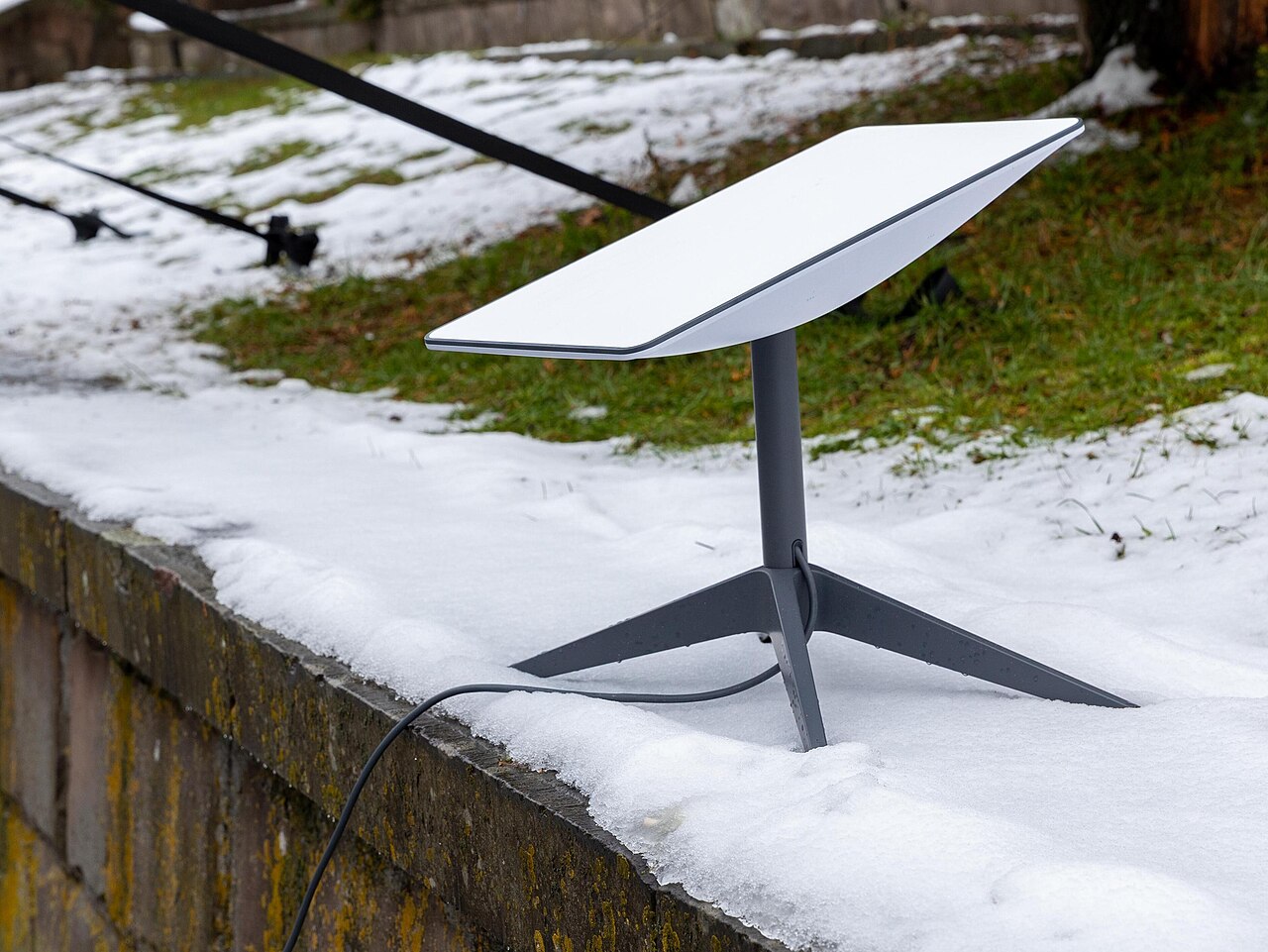
Sources: SpaceX Form 10-Q for Q3 2026 (SEC, filed 22 Oct 2026): income statement, revenue note (concentration of risk, backlog), Note 8 investments, Note 9 debt, tax note, Note 17 related parties, Note 18 segments, cash flow statement; SpaceX Q3 2026 results release (SEC, 20 Oct 2026); CNBC (22 Oct 2026): Boring Co. round size and valuation; Reuters via NBC News (20 Oct 2026): compute customers. Dollar estimates for Customers A and B, the one-off share and the percentages are my own math from the filing. Photo: SpaceX, CC0, via Wikimedia Commons.
— Alex R