SpaceX · NASA · 29 Oct 2026
SpaceX has told NASA's Moon lander companies it won't launch them, the latest step back from the agency that saved it in 2008
According to a new Ars Technica report, SpaceX recently told the US companies building small lunar landers for NASA that it won't provide them launch services. That adds to a list that already includes ending Crew Dragon flights by or before 2030, no new commercial Falcon 9 sales for missions after 2028, and no bids on three new Space Force launches. Existing contracts are still being honored. SpaceX hasn't commented publicly on the lander report.
On this page
The editor holds Tesla and SpaceX shares. Supercharged Daily is independent and not affiliated with either company. Nothing here is financial advice.

What's new today
Ars Technica senior space editor Eric Berger published a long report at 7:00am ET (4:00am PT; ) on 29 Oct 2026, about how SpaceX's relationship with the US government is changing. What's new in it concerns NASA's Commercial Lunar Payload Services program, or CLPS. Under CLPS, NASA pays US companies to deliver robotic science and cargo to the Moon.
Ars cites three sources. They say SpaceX had given "Rough Order of Magnitude" launch price estimates to companies building small landers for NASA's Moon Base, but "recently told these lunar companies they will not provide launch services." At least two of the companies had those estimates or other launch agreements for Falcon 9s later this decade, Ars says.
This change is reported, based on unnamed sources. SpaceX hasn't announced it, and no lander company has confirmed it publicly.
I've spent a lot of time thinking about, and talking to people about a post-Falcon world. Why sunset the world's best rocket? Can Starship replace it? What about Artemis? Why are SpaceXers flocking to Memphis? Grab a coffee, this is a long one.
— Eric Berger (@SciGuySpace) October 29, 2026
Everything SpaceX has stepped back from, in one place
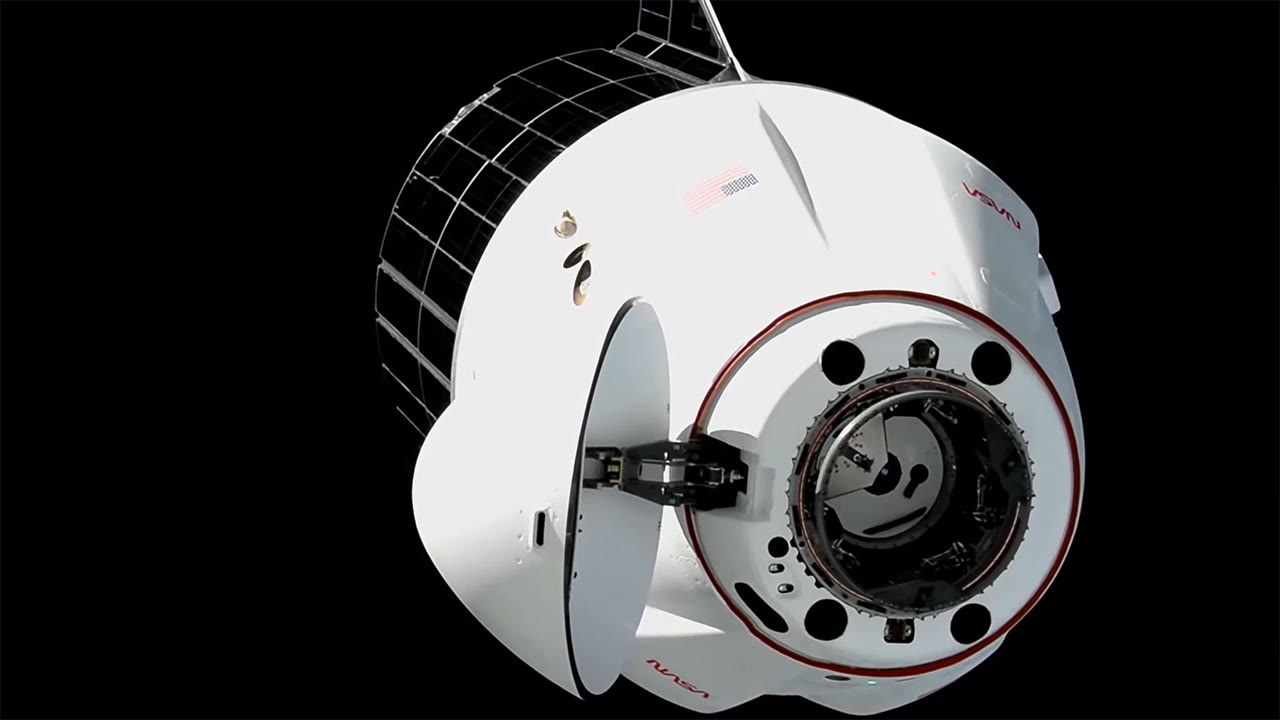
- Crew Dragon for NASA by or before 2030 (reported). Ars says SpaceX has told NASA it will stop flying Crew Dragon by then. In September, Ars reported that SpaceX had agreed to support the space station until 2030. It also said SpaceX had told the private station companies Axiom Space, Voyager Space and Vast that they can't order Crew Dragon missions. SpaceX President Gwynne Shotwell said in September that NASA should rely on Boeing: "They should fly their capsule. The government paid a lot of money for that."
- Commercial Falcon 9 sales for missions after 2028 (reported). Ars reported in October that SpaceX had stopped selling them. On 22 Sep 2026, The Wall Street Journal reported that the Falcon 9 phaseout was sending customers looking for other launches.
- Three new Space Force launches (reported). Politico reported on 22 Oct 2026 that SpaceX told the Space Force it wouldn't bid on them. I covered what that leaves the military last week.
- Falcon 9 for NASA after 2030 (an open question). At a late-October meeting of a NASA safety advisory panel, Kent Rominger said that if the US Deorbit Vehicle launches after 2030, "it may require" a rocket other than Falcon 9. The Deorbit Vehicle is a modified Dragon that will push the space station out of orbit.
- CLPS Moon lander launches (reported today). As above.
What hasn't changed matters too. Ars says SpaceX is still fulfilling its existing contracts with NASA, the Space Force and other government agencies. The pullback is also outside data services such as Starshield, its military communications and observation network. When a reader asked about the military on X, Berger replied that "SpaceX has committed to flying Falcon until Starship is certified for national security missions."
Why SpaceX can afford to say no
Ars puts NASA's contracts with SpaceX over the last two decades at about $20 billion. SpaceX's third-quarter 10-Q reports $14.575 billion in total revenue for the three months ended 30 Sep 2026 alone (as of its 10-Q; my results write-up). So roughly 20 years of NASA awards come to about 1.4 quarters of current sales. My comparison sets total contract value against quarterly revenue, so read it as scale, not like-for-like. Berger calls third-party launches "a rounding error" in SpaceX's revenue after its IPO. The 10-Q says: "We allocate a significant amount of launch capacity to our Connectivity segment, and expect to allocate a significant amount to our SI segment in the future." The Connectivity segment is Starlink. The SI segment, Solutions & Infrastructure, is its AI business.
Ars also sets out the cost to Starship. NASA's Johnson Space Center estimates that an uncrewed Moon landing demo needs "about 22" Starship launches, while Musk says the number "will be more like 6 to 8." Ars's near-term estimate is about 20. At an assumed $100 million per early Starship flight, that's about $2 billion in launch costs. SpaceX's original 2021 Human Landing System contract was worth $2.89 billion and covered both an uncrewed demo and a crewed landing. Ars adds that a single Starlink launch on Starship delivers as much bandwidth as 10 Falcon 9 launches.
Then there's the team. On SpaceX's third-quarter earnings call, Musk said the team that won SpaceX "almost 90 percent" of the world's mass to orbit is now being applied to deploying computing on the ground. "This is a bit like the New York Yankees playing in Little League," he said.
What NASA can lean on instead
- Astronauts: Boeing's Starliner, the capsule Shotwell says NASA should fly. Ars says NASA is investing more in Boeing as a result.
- Moon landers: Blue Origin's New Glenn, which exploded on its launch pad earlier this year. Ars says Blue Origin has nearly rebuilt the pad's vehicle access tower and is investing $3 billion in Florida facilities. The other option Ars names is Relativity Space bringing its Terran R rocket to readiness quickly.
- The crewed Moon landing: SpaceX's Starship lander is still under contract. Jeremy Parsons, NASA's Artemis program manager, told Ars that SpaceX's "management team is definitely committed to the lunar missions." NASA and SpaceX are targeting the in-orbit refueling test for "early" 2027. That test needs Starship launches from Florida, and the first one isn't expected until at least January.
What's confirmed and what isn't
- On the record: Shotwell's September comments that NASA should fly Boeing's capsule. The 10-Q's statement that a significant amount of launch capacity goes to Starlink and is expected to go to the AI segment. Parsons's comments to Ars.
- Reported, not formally announced by SpaceX: no CLPS lander launches, the end of Crew Dragon by or before 2030, no new commercial Falcon 9 sales for missions after 2028, and the skipped Space Force bids. SpaceX hasn't made a public statement on the lander report.
- Still open: whether Falcon 9 flies NASA missions after 2030, and when Starship can carry traditional satellites. Ars says it offered SpaceX the chance to commit publicly to a large payload door, and the company didn't take it.
My read
This is SpaceX acting like the company its numbers say it is. A business that books $14.6 billion in a quarter doesn't need a Moon lander launch. And when Musk says his best launch team is now building data centers, that shows where the priorities are. The catch is that NASA built its plans around SpaceX. Its alternatives are Starliner, a New Glenn that blew up on its pad this year, and a Terran R that still has to reach readiness. The most telling line in the report is from NASA's own Artemis manager. Asked whether SpaceX would sideline Starlink launches for a Moon landing, he said: "It's a fair question, especially as they have gone public."
Sources: Eric Berger, Ars Technica (29 Oct 2026); Ars Technica, "NASA has a Dragon dilemma" (Sep 2026); SpaceX Form 10-Q, quarter ended 30 Sep 2026; NASA, CLPS; Politico (22 Oct 2026); The Wall Street Journal (22 Sep 2026); Eric Berger on X (29 Oct 2026). Figures as of 29 Oct 2026.
— Alex R