SpaceX · Falcon 9 · 23 Oct 2026
SpaceX passed on three Space Force launches, and no other rocket company bid either. Here's every option the military has left
The Space Force recently tried to book rockets for three national security missions. SpaceX didn't bid, and nobody else did either, Politico reported on Thursday. It's the first concrete sign of what winding down Falcon 9 means for the Pentagon, and when you go through the alternatives rocket by rocket, it's easy to see why nobody else stepped in.
On this page

What happened
According to Politico's report (published Thursday, Oct. 22), the Space Force put three future satellite missions out for bids through its National Security Space Launch program, or NSSL. Two people familiar with the missions told Politico that SpaceX declined to offer a launch, and no other company bid either.
Two of the three were for the Space Development Agency, the part of the Space Force building a network of hundreds of low-orbit satellites for military data links and missile warning and tracking. Politico said details of the third mission and the target launch dates are unclear. SpaceX did not respond to Politico's request for comment, so the "declined to bid" detail rests on those two unnamed sources.
The Space Force official in charge of buying launches played it down. "I wouldn't say there [are] missions I'm worried about being able to fly," Brig. Gen. Eric Zarybnisky, the service's acting portfolio acquisition executive for space access, told Politico. He also admitted, "Temporarily, there are some things we'll need to work through, again, as we get new providers flying."
Why SpaceX is walking away from easy money
This is the result of a plan Elon Musk spelled out in public two months ago. On (shown in your time zone), he wrote on X, in a reply to space commentators, that "once Starship is flying reliably several times per week," it makes sense to move "super scarce SpaceX engineering and production resources to Starship," which "means winding down Falcon."
That's still a plan, not something that's happened. Falcon 9 is still flying several times a week. But the wind-down is already showing up in sales. In September, The Wall Street Journal reported that SpaceX had stopped selling shared rideshare flights and that some companies couldn't get Falcon 9 flights after 2028. A missing bid on a military mission fits the same pattern. If a satellite might not be ready to fly until Falcon is close to retirement, SpaceX would rather not promise the ride.
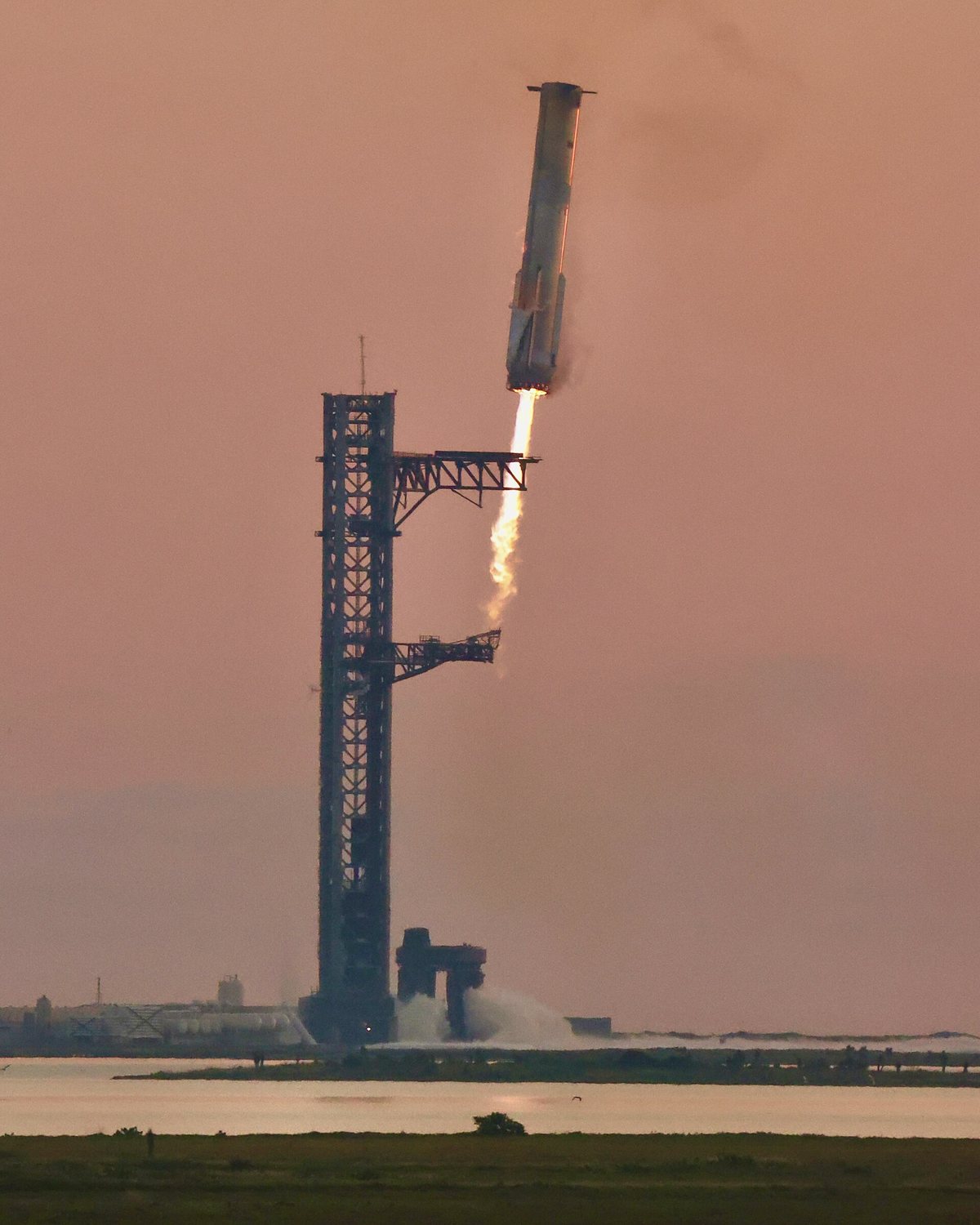
The timeline Musk is betting on is aggressive. On Tuesday's earnings call, as Ars Technica reported, SpaceX said it's aiming to catch both Starship stages on Flight 15 next month. Musk said he expects weekly Starship flights in the first half of 2027 and twice-weekly flights in the second half. All of those are targets, not results.
How much the military relies on Falcon
The Space Force's own numbers show how big the gap is. When Space Systems Command handed out its fiscal 2026 "Lane 2" missions (the most demanding national security launches) on Oct. 1, 2025, SpaceX got five of the seven, worth $714 million. ULA got two, worth $428 million, and Blue Origin got none. By my math, that's 71% of the missions and 63% of the money going to one company's rocket.
The lower-risk "Lane 1," where SDA satellites usually go, was supposed to be the place for newer companies to break in. Instead, SpaceX won nine Lane 1 task orders worth $739 million in January alone. Politico puts SpaceX at 85% of all US launches in 2025.
The alternatives, rocket by rocket
So who could have bid? I went through every rocket the Space Force could realistically turn to, based on what Politico and the Space Force have said:
| Rocket | Can it fly NSSL missions today? | Where it stands |
|---|---|---|
| SpaceX Falcon 9 / Heavy | Yes | Certified and flying, but being wound down. SpaceX reportedly passed on these three missions. |
| ULA Vulcan | Certified, but troubled | Grounded earlier this year over solid rocket booster problems, and Politico says it has struggled to launch consistently. The Space Force has already moved some Vulcan missions to Falcon. |
| Blue Origin New Glenn | Not right now | A rocket exploded on its only Florida launch pad in May. Politico says it's likely out of action until next year. |
| SpaceX Starship | No | Built for "flat stack" satellites like Starlink. Most military satellites are designed for a larger cargo bay, so they don't fit as is. |
| Rocket Lab Neutron, Stoke Nova, Relativity Terran R | No | None has flown successfully yet, and NSSL rules don't let a company bid until its rocket has flown successfully. |
Seen that way, the empty bid list isn't so mysterious. Of the three companies in the Space Force's top launch lane, one is retiring its rocket, one was grounded this year and one has no working pad. Everything else either hasn't flown or wasn't designed for military satellites.
What happens next
Zarybnisky told Politico the date of the last military Falcon flight "will really be driven by the spacecraft customers that we have launch service contracts for already." In other words, satellites that already have Falcon contracts should still fly on Falcon. The real problem is new missions like these three, which need a ride after Falcon slows down and before anything else is ready.
An industry representative quoted by Politico said the service probably needs to "get creative" and start buying capacity now. Another source said the Space Force should be allowed to reserve launches years out on rockets that haven't flown yet, because commercial companies are already doing that. Either way, it would take Congress and the Pentagon changing how they buy launches, and nobody has announced that yet.
Bottom line: until Starship is flying every week and can carry a military satellite, the Space Force will be competing for the last Falcon 9 slots with everyone else.
Sources: Politico (22 Oct 2026); @elonmusk on X (22 Aug 2026); Space Systems Command, FY26 Lane 2 assignments (made 1 Oct, published 3 Oct 2025); Via Satellite (8 Jul 2026); The Wall Street Journal (22 Sep 2026); Ars Technica (21 Oct 2026). The rocket-by-rocket table and share math are my own. Photo: U.S. Space Force / Gwendolyn Kurzen, public domain.
— Alex R