SpaceX · 10 Oct 2026
Venezuela nationwide. Brazil to the phone.
Starlink won approvals in two Latin American countries this week: a nationwide licence in Venezuela and 15+15 MHz of Brazil’s 2 GHz band for beaming signal straight to phones.
Brazil’s regulator ANATEL approved the block on Friday, Brazilian trade outlet Teletime reports. That is half the 30+30 MHz Starlink asked for, and it is the band its next-generation phone service needs for voice, texts and data.
In Venezuela, regulator Conatel says it granted SpaceX’s local company a general licence and Ku-band concessions. Conatel says Starlink proved itself after June’s earthquake in La Guaira, carrying texts between all three Venezuelan mobile networks by satellite.
Two licences in one week, and both of them are about phones, not dishes on a roof.
The 800 MHz buy next door

Both Latin American yeses came days after SpaceX agreed to buy Grain Management’s nationwide 800 MHz spectrum, the low-band airwaves Starlink Mobile needs to reach phones inside buildings. SpaceX says it gets up to 14 MHz of paired spectrum, and most phones already support the band.
An 800 MHz wave is about 37 cm long, longer than a school ruler and over twice a mid-band wave, so it loses far less signal through brick and concrete. The licences came from T-Mobile, which had to sell them as a condition of its Sprint merger. The spectrum deal itself still needs FCC sign-off, and the price was not disclosed.
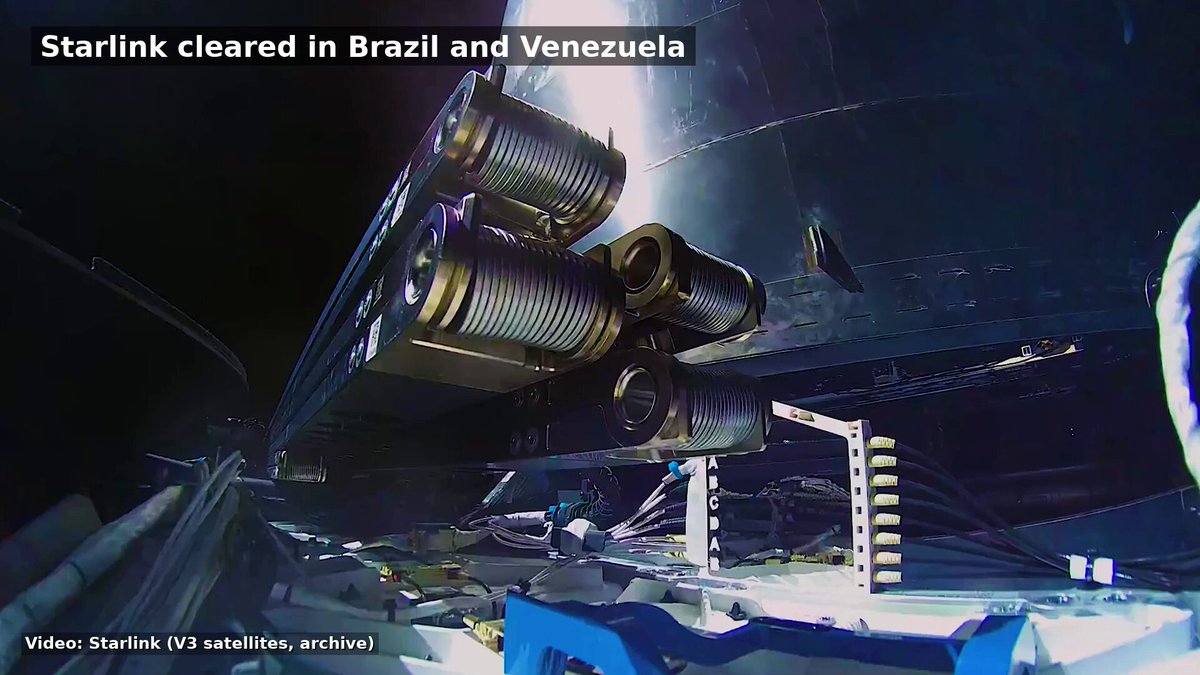
I posted the official satellite clip because the story is the licences, not a montage. The live version is on X.