SpaceX · Starship · 16 Nov 2026
Starship V4 by the numbers: a 70-meter ship, nine engines and propellant at a quarter of the price per ton
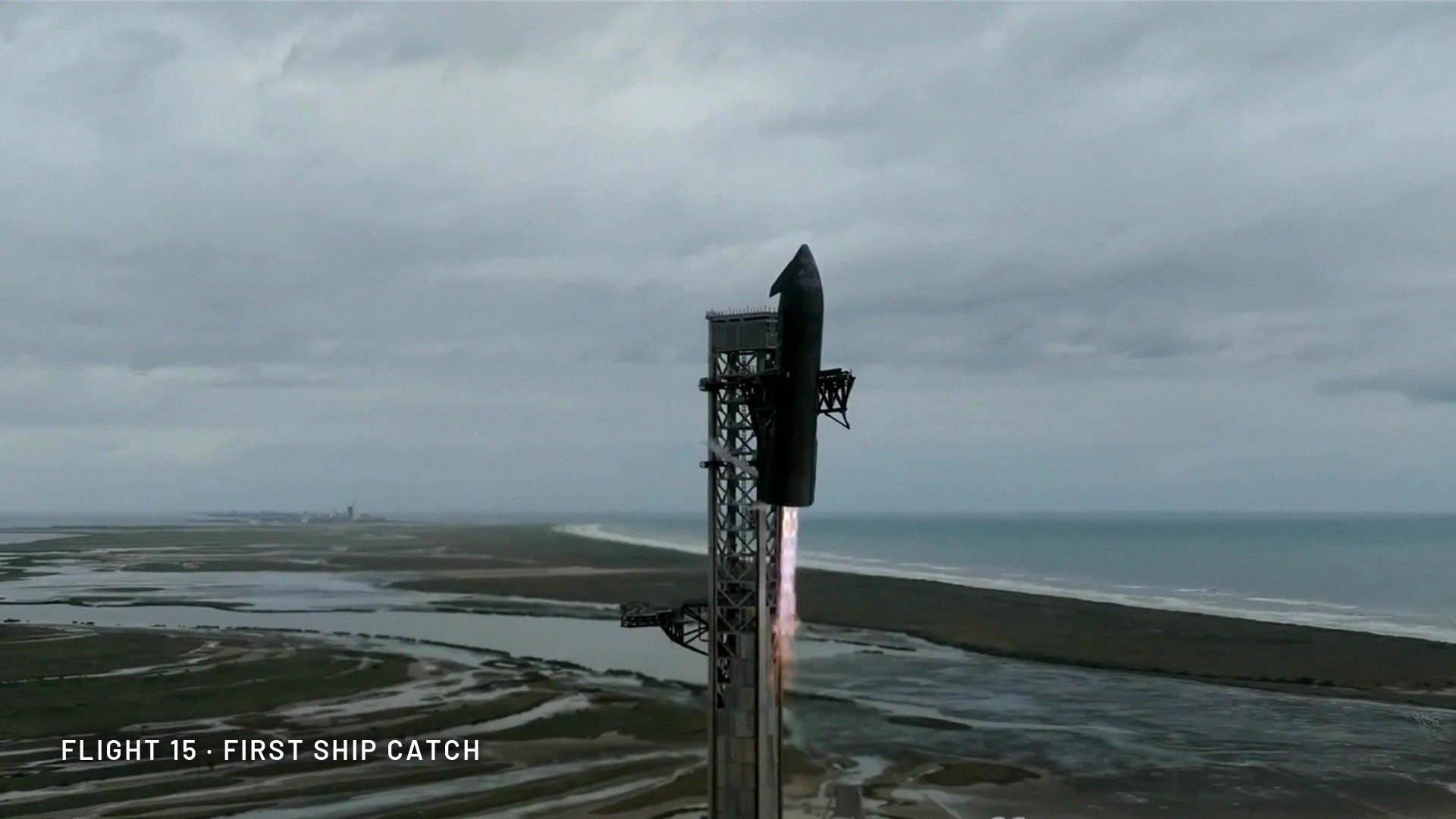
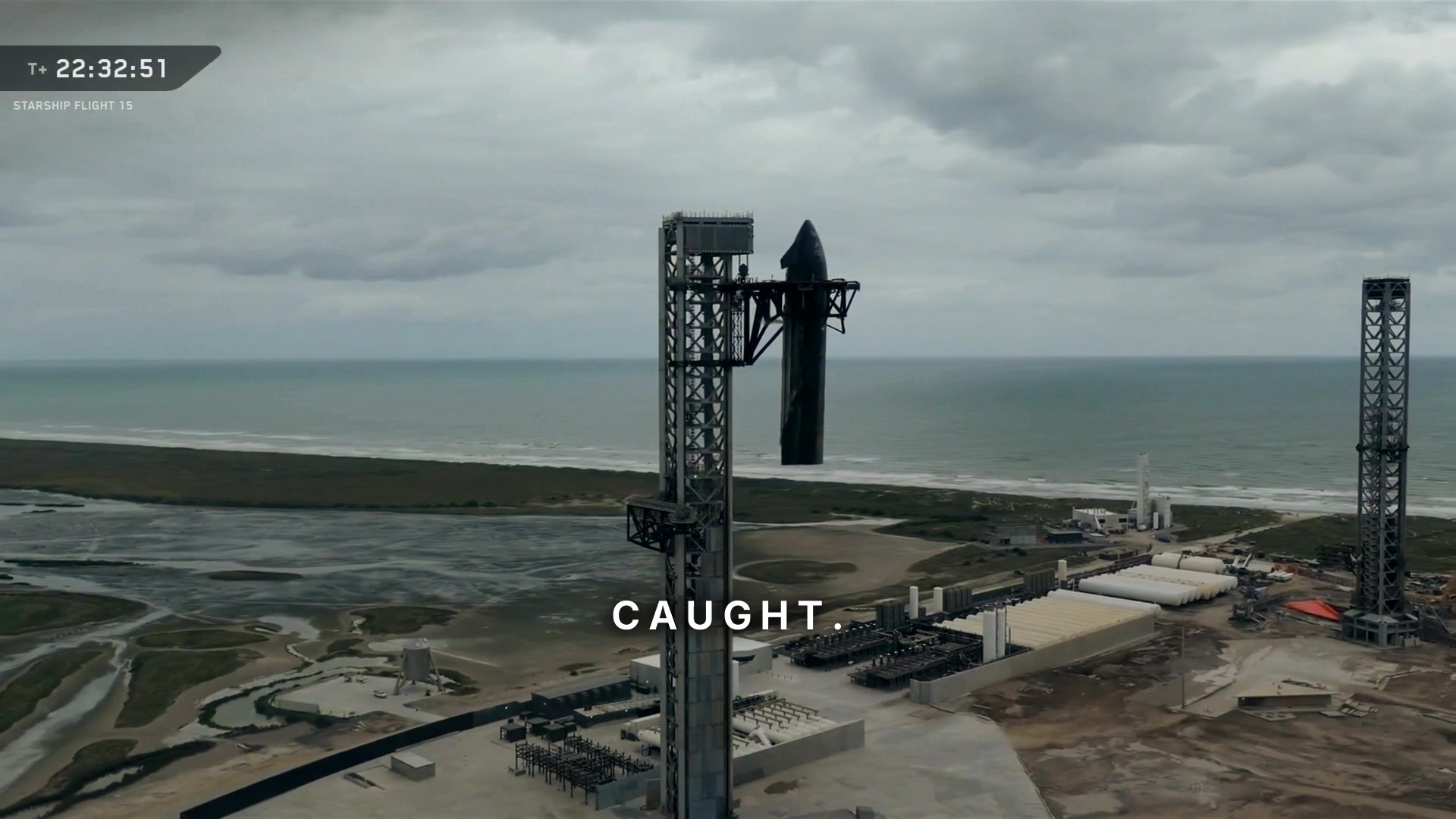
A day after SpaceX caught a ship for the first time, Elon Musk gave the first firm size for the next version: about 70 meters long, more than 60% more propellant and nine engines instead of six. These are plans, not hardware. Here's how they compare with the V3 ship SpaceX lists today.
On this page
The editor holds Tesla and SpaceX shares. Supercharged Daily is independent and not affiliated with either company. Nothing here is financial advice.

Starship V4 will be ~70m long, which is roughly a 40% length increase and allows >60% more propellant load.
— Elon Musk (@elonmusk) November 16, 2026
Engine count will be raised to 9, with 3 more Raptor-Vacuum engines added, and these will be higher thrust V4 engines.
What Musk said
Musk posted the figures on Sunday evening: a ship of about 70 meters, "roughly a 40% length increase," room for ">60% more propellant," and nine engines. The three new ones are Raptor Vacuum engines, and he said all of them will be "higher thrust V4 engines." He didn't give a date. In August 2025 he said V4 would fly in 2027, Teslarati notes. Treat all of this as a stated plan. SpaceX hasn't published V4 specifications, and no V4 ship has been built or tested in public.
A few hours later, replying to investor Christian Keil's estimate that fueling a Starship costs about $1 million, Musk wrote: "Propellant cost per flight will drop below $500k and payload will exceed 200 tons." The $1 million figure is Keil's and SpaceX hasn't confirmed it.
V3 today vs. V4 as described
SpaceX's technical specifications page is the baseline. The V4 column uses only what Musk said, plus my arithmetic where marked.
| Ship today (SpaceX) | V4 ship (Musk) | Change | |
|---|---|---|---|
| Length | 52 m | ~70 m | +18 m (+35% on SpaceX's figure) |
| Propellant | 1,600 t | >2,560 t (my math from ">60%") | at least +960 t |
| Engines | 6 (3 Raptor, 3 Raptor Vacuum) | 9 (3 Raptor, 6 Raptor Vacuum) | +50% |
| Propellant per engine | ~267 t | ~284 t or more | about +7% |
| Payload, reusable | 100+ t | "exceed 200 tons" | about double |
| Full stack | 124 m | ~142 m if the booster stays 72 m | not stated by Musk |
Sources: SpaceX Starship specifications page; Musk posts of 16 Nov. "Ship today" is the vehicle SpaceX lists, which flew Flight 15. Per-engine and stack figures are my arithmetic, not SpaceX's. Re-check the live spec page when this goes up: 70/52 is +35%, not Musk's "roughly 40%."
One small mismatch: 70 meters is about 35% longer than the 52 meters SpaceX lists, not 40%. Musk's "roughly 40%" works if you measure from about 50 meters, so he may be using a different reference point for the current ship. Either way it's a big stretch on a vehicle that only reached orbit for the first time in September.
The engine change is the more interesting part. Doubling the Raptor Vacuum count while keeping three sea-level engines points the extra thrust at the part of the flight spent in space, where vacuum engines are more efficient. More vacuum thrust is what you'd want to push a heavier, fuller ship. The 200-ton payload claim depends on that, and on the "higher thrust" engines Musk hasn't yet put numbers on.
The fuel bill per ton
Putting Keil's figure next to Musk's gives a rough sense of where SpaceX wants the costs to go. At $1 million to carry 100 tons, propellant works out to about $10,000 per ton of payload, or $10 per kilogram. At under $500,000 for more than 200 tons, it's under $2,500 per ton, a drop of at least 75%. That's propellant only. It leaves out the vehicle, refurbishment, ground crews and everything else in a launch price, so some headlines describing this as "launch costs" below $500,000 go further than Musk did.
Ship 42 and the reuse problem
New level unlocked →
— SpaceX (@SpaceX) November 15, 2026
The cost math only works if ships fly again quickly. Musk said Sunday he had been "going over the whole Starship heat shield" and that it "looks great," along with the engines. "Ship 42 could probably be reflown with a few weeks of refurbishment," he wrote, but "many small fixes are needed to achieve immediate reusability (like an airplane), which requires zero expected refurbishment, apart from scheduled maintenance." Ship 42 is a V3 vehicle. No reflight date has been set, and "a few weeks" is his estimate after an inspection, not a schedule.
So the sequence Musk is describing runs like this: prove a caught V3 ship can fly again, cut the refurbishment to zero, then move to a longer V4 ship that carries twice the payload on a cheaper fuel load per ton. Only the first catch has happened so far. My Flight 15 recap covers how it went, and every flight from 1 to 15 shows how fast each version has changed.
— Alex R
Sources: Elon Musk, Starship V4 size and engines, 8:33 p.m. ET 15 Nov 2026; Musk, propellant cost and payload, reply to Christian Keil; Musk on Ship 42 refurbishment; SpaceX Starship technical specifications (52 m, 1,600 t, 6 engines, 72 m booster, 124 m stack, 100+ t reusable); @SpaceX, "New level unlocked"; August 2025 V4 timing as noted by Teslarati. Photo: Steve Jurvetson, CC BY 2.0, via Wikimedia Commons. Length, propellant, per-engine, stack and $/ton figures marked as my math.