Tesla · Earnings · 20 Oct 2026
Tesla Q3 preview: the cash burn, what's at stake for the stock, and the SpaceX merger talk
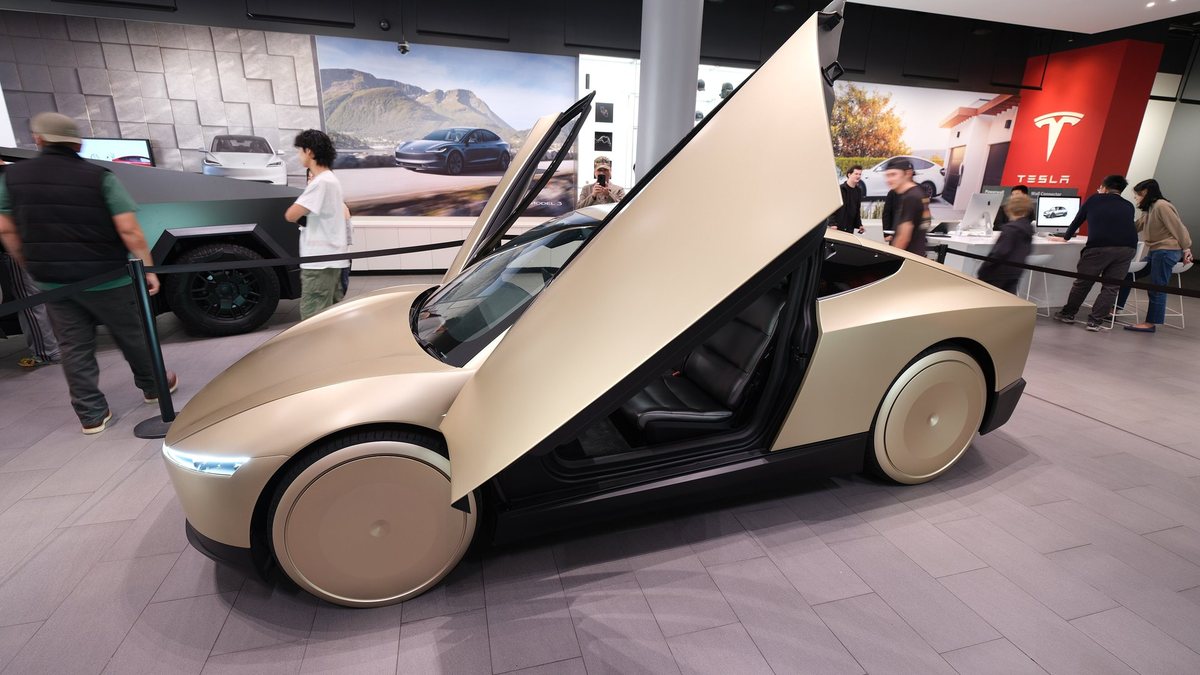
Tesla reports third-quarter results after the US close on Wednesday. Deliveries are already known. The open questions are how much cash Tesla is burning to build Cybercab, Optimus and its AI and chip plans, whether car margins are holding, and what the call says about the future. That includes the Tesla–SpaceX merger talk, which so far is speculation. Every forecast below is labelled as an estimate.
When
Tesla says it will post Q3 2026 results after the market close on Wednesday 21 October. It will put a link to its Q3 update on ir.tesla.com and hold a live Q&A webcast at 5:30pm ET (). An archived replay is due about two hours after the Q&A ends (Tesla Q3 production and deliveries release).
Already reported
These are facts Tesla published at the start of October (Tesla release):
- Deliveries: 486,532 (478,237 Model 3/Y, 8,295 other models)
- Production: 464,391
- Energy storage deployed: 13.7 GWh
Tesla delivered 22,141 more cars than it built in the quarter, so it drew down inventory. Tesla itself warns that deliveries "should not be relied on as an indicator of quarterly financial results" (Tesla release).
What analysts expect, and why each number matters
On 19 October Tesla published a company-compiled consensus from 23 sell-side analysts. Tesla says it doesn't endorse these figures. All numbers in this section are estimates (averages, Tesla IR).
Revenue: about $28.34B (estimate)
The split is about $20.27B from automotive, $3.72B from energy generation and storage, and $4.35B from services and other (Tesla IR). The delivery count is already known, so the revenue line mainly tells us the average selling price, which shows whether price cuts and incentives are still eating into each car sold.
Margins: 17.9% gross, 2.5% operating (estimates)
Gross margin shows how much Tesla keeps on each car or Megapack before spending on R&D and overheads. Operating margin is what is left after those costs. Analysts expect about $5.06B of gross profit and about $4.34B of operating expenses, which leaves only about $721M of operating income (Tesla IR). With so little left over, a one-point miss on gross margin, roughly $280M on this revenue base, could wipe out much of the operating profit. That is why margins tend to move the stock more than EPS.
Free cash flow: about –$4.51B (estimate), and why it's negative
Analysts expect operating cash flow of about $3.27B against capex of about $7.77B for the quarter (Tesla IR). The gap is an investment choice, not a collapse in sales. Tesla has said capital spending will be above $25 billion this year (Reuters). Yahoo Finance reports the money is going to Optimus production lines, AI compute, the Cybercab ramp and the Terafab chip plant being built with SpaceX (Yahoo Finance). Analysts still expect Tesla to end the quarter with about $39.0B in cash and investments (estimate, Tesla IR). So the question is not whether Tesla can afford the spending. It is how long the spending lasts, and when it starts to earn a return.
Energy storage: about $3.72B revenue (estimate)
Tesla deployed 13.7 GWh of storage in Q3 (Tesla). Energy is the part of the business that doesn't depend on car demand. It also has a link to the AI story: xAI, now part of SpaceX, spent about $430 million on Megapacks last year (CNBC). If storage margins hold up, energy cushions the car side while capex is high.
EPS: $0.45 non-GAAP and $0.23 GAAP (estimates)
The gap between the two is mostly stock-based pay (about $890M after tax, estimate) plus mark-to-market moves in Tesla's digital assets and SpaceX stake (Tesla IR). These swings can make the GAAP number noisy, so the non-GAAP figure is the one headlines will compare.
What it could mean for the stock
This is analysis, not advice. Scenarios aren't predictions.
What options are pricing. Options traders are pricing a move of about 7–7.5% either way after the report. Pepperstone puts it at 7.43%, Options Trading Report at 7.6%; both are third-party estimates from the last few days (Pepperstone; Options Trading Report). Pepperstone notes that the last four reports moved the stock about 5.95% on average, and that the shares fell sharply after the July report (Pepperstone). A priced move says how big a move traders expect, not which way it will go.
Bull case
- Gross margin comes in at or above about 18%, and operating income beats the roughly $721M estimate.
- Free cash flow is less negative than –$4.5B, or Tesla gives a clear capex peak and a funding plan.
- Concrete, dated milestones for Cybercab and robotaxi expansion, Optimus production and FSD.
- Energy storage keeps growing as a source of profit.
Bear case
- Margins slip below the estimates as pricing pressure continues.
- Capex guidance rises again with no timeline for a return.
- Autonomy or Optimus timelines slip, or come without detail. Tesla is also answering an NHTSA special order on how it self-certified the Cybercab, which has no steering wheel or pedals; the answers are due 30 October (Yahoo Finance).
- Merger questions get no clear answer, which could keep the uncertainty going.
The swing factors
- Guidance: any 2026–27 delivery, margin or capex outlook.
- Cybercab and robotaxi: Tesla launched its Cybercab service in Austin on 3 September (Yahoo Finance). Expansion dates and the NHTSA response matter.
- Optimus and FSD: production numbers and dates, not demos.
- Capex outlook: whether the "more than $25B" figure for 2026 changes (Reuters).
The Tesla–SpaceX merger talk: what's actually been said
Speculation, not fact. Neither Tesla nor SpaceX has proposed or confirmed a merger, and Reuters reports that neither company nor Musk has officially committed to one (Reuters).
- Musk, July: he said discussing a deal wouldn't be appropriate on an earnings call, so investors shouldn't expect clarity on Wednesday (Yahoo Finance).
- Musk, Tesla's Q2 earnings call: he spoke of "more and more overlap" between Tesla and SpaceX (as reported by CNBC).
- Gwynne Shotwell, SpaceX COO, before the June IPO: a merger "might make Elon's life a little easier" (told to CNBC).
- Barclays (analyst Dan Levy): a deal could be announced before Tesla's annual meeting, which must be held by 6 December, with SpaceX the likelier buyer. Levy calls the main value "vertical integration" in AI, not cost savings (CNBC; Reuters).
- Prediction markets: on Kalshi, odds of a merger before March jumped to 56% from 29% after the Barclays note (CNBC). These are trader bets, not information from the companies.
What it could mean for shareholders (speculation)
If SpaceX bought Tesla in an all-stock deal, as Barclays suggests, Tesla holders would swap their shares for SpaceX stock and end up owning a slice of Starlink, launch and the xAI business. SpaceX holders would take on cars, energy, robotaxi and Optimus. The terms that matter are the exchange ratio and any premium for Tesla holders. None of those exist yet. I covered the Barclays scenario in more detail here: Barclays says a Tesla–SpaceX merger is becoming "market consensus".
Why it might happen, and why it might not
- For: the businesses already overlap. They share a CEO, and they work together on Terafab and the Roadster's SpaceX thrusters. xAI, inside SpaceX, buys Tesla Megapacks and Cybertrucks (CNBC).
- Against: a deal would need shareholder approval and regulatory review. There are real conflict-of-interest questions when one person controls both sides, and Tesla holders may want a premium. Nothing has been filed.
If an analyst asks about it on the call, the answer is worth hearing. But silence wouldn't tell us much either way.
Facts vs estimates vs speculation
- Fact: results after the close on 21 Oct, with a Q&A at 5:30pm ET. Q3 deliveries were 486,532, production 464,391 and storage deployments 13.7 GWh (Tesla).
- Estimate: $28.34B revenue, 17.9% gross margin, $0.45 non-GAAP EPS and –$4.51B free cash flow (Tesla's compiled consensus). An options-implied move of about 7–7.5% (Pepperstone; OTR).
- Speculation: a Tesla–SpaceX merger (Barclays, Kalshi). Nothing has been announced.
My read
Deliveries are known, so the surprise will be in the margins and the cash. A multi-billion-dollar cash burn is already priced into these estimates. What I'll be listening for is whether Tesla puts dates and numbers on Cybercab, Optimus and the capex peak. If the merger comes up, I want to know whether it's being studied or just being asked about.
Sources: Tesla, "Third Quarter 2026 Production, Deliveries & Deployments" (Tesla IR, 2 Oct 2026); Tesla IR, "Q3 2026 Earnings Consensus" (19 Oct 2026); Reuters via Moneycontrol (19 Oct 2026); CNBC, Kalshi merger odds (16 Oct 2026); CNBC, SpaceX Q3 live updates (20 Oct 2026); Yahoo Finance Tesla Q3 preview (20 Oct 2026); Pepperstone and Options Trading Report (options-implied move). All revenue, margin, EPS, capex, cash-flow and options figures are pre-results estimates. Merger content is speculation. Not investment advice.
— Alex R