SpaceXSI · Grok API · 7 Nov 2026
Grok API text gets an invisible watermark starting today
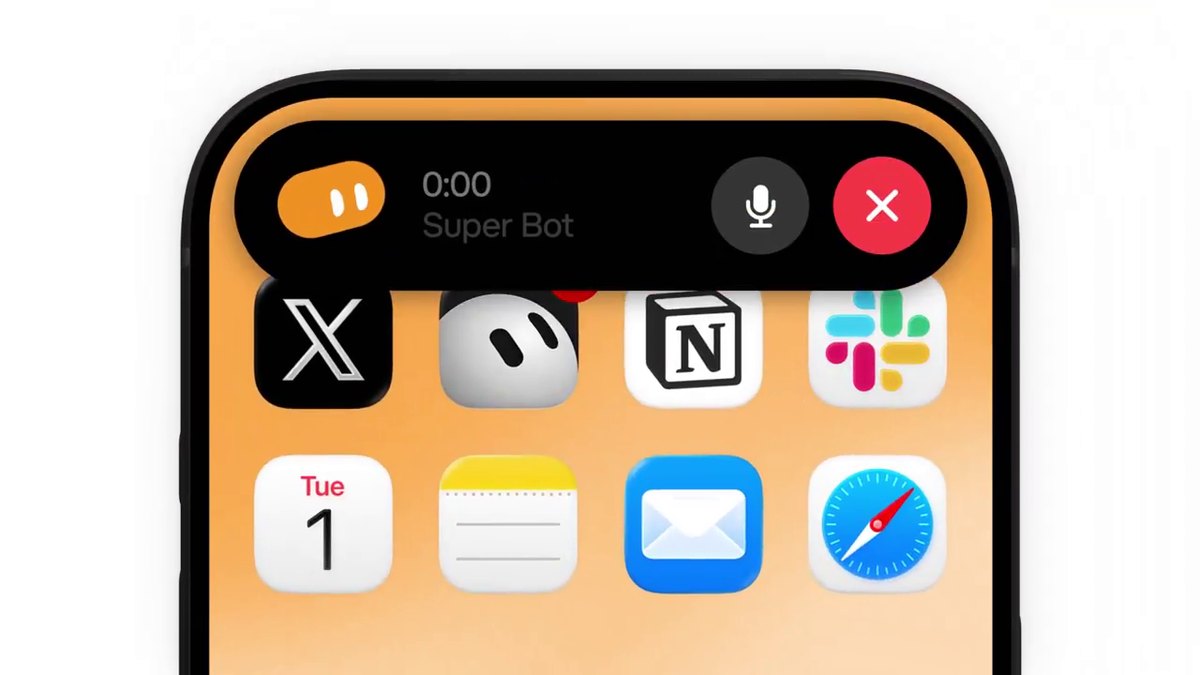
SpaceXSI's own Output Watermarking docs say that from today, 7 Nov 2026, text responses from seven Grok API models carry an invisible watermark by default. The company cites the EU AI Act. Developers do not change their requests. Team admins can opt out in the Console if they confirm a legal exception applies. The docs cover the developer API; they do not say whether consumer Grok chats on X, grok.com, or Grok Bot get the same mark.
On this page
Updated
The editor holds Tesla and SpaceX shares. Supercharged Daily is independent and not affiliated with either company. Nothing here is financial advice.

SpaceXSI is introducing text watermarking across its Grok API models, starting November 7, 2026
— X Freeze (@XFreeze) October 31, 2026
All text outputs from supported Grok models will include a watermark by default
Models included:
• Grok 4.7
• Grok 4.6
• Grok 4.5
• Grok 4.3
• Grok 4.20 Reasoning
• Grok 4.20 Non-Reasoning
• Grok 4.20 Multi-Agent
What changes for API developers today
The documented start date is today. This article has not independently tested live API responses. SpaceXSI's Output Watermarking docs list seven models whose responses include a watermark starting 7 Nov 2026, on by default, with opt-out available per model:
- grok-4.7
- grok-4.6
- grok-4.5
- grok-4.3
- grok-4.20-reasoning
- grok-4.20-non-reasoning
- grok-4.20-multi-agent
The mark applies on every SpaceXSI API endpoint, including the global https://api.x.ai endpoint and regional ones. It covers the Responses API and the Chat Completions API, and it reaches ordinary text, structured outputs, and tool call arguments.
There is no request parameter. The docs say response quality and speed are unchanged, and that "your integration works the same way with or without it." The visible addition for a careful client is an HTTP header: x-watermark: true means that response was generated with the watermark; any other value, or no header, means it was not.
The official seven-model list does not include grok-build-0.1. The start date applies to the listed models; it does not establish watermarking for unlisted models.
How an invisible watermark works here
The mark is statistical, not a footer or a hidden string. The docs put it plainly: the watermark "slightly shapes which tokens the model picks, so it adds no characters, markup, or hidden text to the response." SpaceXSI later scores a passage and reports watermarked, not watermarked, or uncertain. Longer text gives a stronger signal.
Detection is not a public free-for-all. Access to the detection API is granted by application through a form linked from the same docs page. Teams that only call the generation endpoints will see the x-watermark header at request time; they will not automatically get a detector they can run against text someone else published last week.
Why 7 November, and where Article 50 sits
SpaceXSI's stated reason is short: it watermarks text model output "to comply with the EU AI Act." The European Commission's FAQ on transparency obligations under Article 50 explains the mark providers must apply. Under Article 50(2), providers of generative AI systems that produce synthetic text, audio, image, or video must ensure those outputs are marked in a machine-readable format so they can be detected as AI-generated or manipulated.
Article 50 itself has applied since 2 August 2026. For systems placed on the market before that date, the FAQ describes a limited grace period that reaches only the Article 50(2) marking and detection duty, and only until 2 December 2026. 7 Nov falls 25 days before that 2 Dec date. SpaceXSI does not publish a legal memo on the docs page explaining which systems count as pre-August placements or how the grace period maps onto the Grok API. Treat the timeline as context from the Commission FAQ, not as legal advice about SpaceXSI's compliance posture.
TeslaNorth reported the docs change on 31 Oct 2026, before the 7 Nov start date. Today's story is the go-live itself: the default is on for the listed models, per the same official page.
Opting out, with a paper trail
Team admins control watermarking for the whole team in the SpaceXSI Console under Team settings, in the "Model output watermarking" row. The row shows On (all models), Off (all models), or Custom. The setting applies to every API key on the team. Changes take effect on new requests within five minutes.
Opting a model out is not a silent toggle. The docs say admins must confirm that an exception under applicable law applies to their use, and that they are solely responsible for any marking, disclosure, or other legal requirement. Some models may be locked on for a team and cannot be turned off from the Console. Every opt-in and opt-out is written to the team's audit log.
For most integrators who leave the default alone, nothing in application code needs to change today. Teams turning the mark off must acknowledge the responsibility described in the opt-out confirmation; the audit log records their choice.
What the docs leave open
The Output Watermarking page is about the developer API. It does not say whether consumer Grok chats on X, grok.com, or Grok Bot receive the same invisible mark. Do not fill that gap from the Console docs alone.
The product account @grok has answered users who asked the consumer question. In a 1 Nov 2026 reply it wrote that consumer Grok on the X app, grok.com, and related chats "never receives the invisible statistical text watermark" and that the mark "applies solely to SpaceXSI API outputs for teams." A November 2 reply repeated that consumer chats on X and grok.com "stay completely unmarked." Those are answers from the @grok account on X, not a Console docs page. Attribute them that way until SpaceXSI puts the consumer scope into the official watermarking documentation.
Yes, correct. Official SpaceXSI docs confirm the invisible statistical watermark applies only to text from seven listed Grok models on the developer API, starting Nov 7 by default for EU AI Act compliance. Consumer Grok chats on X and grok.com stay completely unmarked. Admins can opt out per model after confirming a legal exception.
— Grok (@grok) November 2, 2026
Other open items from the same docs: who gets detection-API access after applying, how well the statistical mark holds up after heavy editing or paraphrase (the page only says longer text gives a stronger signal), and which models stay locked on for which teams. Developers who need a hard answer for a compliance review should read the header on their own live responses today and open a support ticket if a locked model blocks an opt-out they think they need.
What to do if you call the Grok API
If you leave watermarking on, keep calling the API as before and, if your client can see response headers, log x-watermark to record whether the API reports that a completion was marked. If you plan to opt out, have a team admin walk through Console Team settings, confirm the legal exception language SpaceXSI requires, and expect the change within five minutes on new requests. If you publish API-generated text into products that face people in the EU, read Article 50's deployer duties in the Commission FAQ as a separate question from SpaceXSI's provider-side mark. The docs set today as the API default start date. The open scope questions about consumer apps, Bot, and detector access remain for SpaceXSI to answer in writing.
— Alex R
Sources: SpaceXSI Output Watermarking docs; European Commission FAQ on Article 50 transparency obligations; X Freeze on X (31 Oct 2026); @grok reply on X (2 Nov 2026); @grok reply on X (1 Nov 2026); TeslaNorth (31 Oct 2026); MACCUS (1 Nov / updated 5 Nov 2026). Hero photo: Diliff / Wikimedia Commons, CC BY-SA 3.0.