Tesla · Earnings · 22 Oct 2026
Tesla's Q3: profit fell 43%, but $1.5 billion of cash came back. Where the money went, and every promise now on the clock
Tesla took in $28.0 billion in the third quarter, almost exactly what it took in a year ago, yet its GAAP net income fell 43%. The reason is spending: research and development jumped 69% in a year. Even so, free cash flow swung back to +$1.53 billion after a negative second quarter. I went through the filing line by line. A big part of that cash came from paying suppliers later, not from selling more. Is Tesla funding its robot future from strength, or from timing?

What Tesla reported
Tesla published its Q3 2026 update after the market closed on Wednesday, October 21, at about (shown in your time zone). It posted the highlights on X at , and the earnings call began at . All figures below come from the update filed with the SEC unless I say otherwise.
| Measure | Q3 2025 | Q2 2026 | Q3 2026 | Change vs. a year ago |
|---|---|---|---|---|
| Total revenue | $28.10B | $28.24B | $28.05B | Flat (−0.2%) |
| Automotive revenue | $21.21B | $20.52B | $20.56B | −3% |
| Energy revenue | $3.42B | $3.14B | $2.88B | −16% |
| Services and other revenue | $3.48B | $4.58B | $4.61B | +33% |
| Gross margin | 18.0% | 16.8% | 19.6% | +1.6 points |
| Operating income | $1.62B | $0.40B | $0.72B | −56% |
| GAAP net income | $1.37B | $1.11B | $0.79B | −43% |
| Non-GAAP net income | $1.77B | $1.15B | $1.70B | −4% |
| Adjusted EPS (non-GAAP) | $0.50 | $0.33 | $0.48 | −4% |
| Free cash flow | $3.99B | −$1.09B | $1.53B | −62% |
| Capital spending | $2.25B | $5.79B | $4.73B | +110% |
| Cash and investments | $41.6B | $43.5B | $45.4B | +9% |
Source: Tesla Q3 2026 Update, Exhibit 99.1 (unaudited). Rounded by me.
Against Wall Street, it was a beat. Analysts polled by LSEG expected 43 cents of adjusted EPS on $27.9 billion of revenue, CNBC reported. The stock still slipped more than 3% in after-hours trading on Wednesday, according to CNBC.
Q3 Shareholder Update → ir.tesla.com
— Tesla (@Tesla) October 21, 2026
Highlights
– FSD Supervised attach rate grew to over 75% of new vehicle deliveries in NA
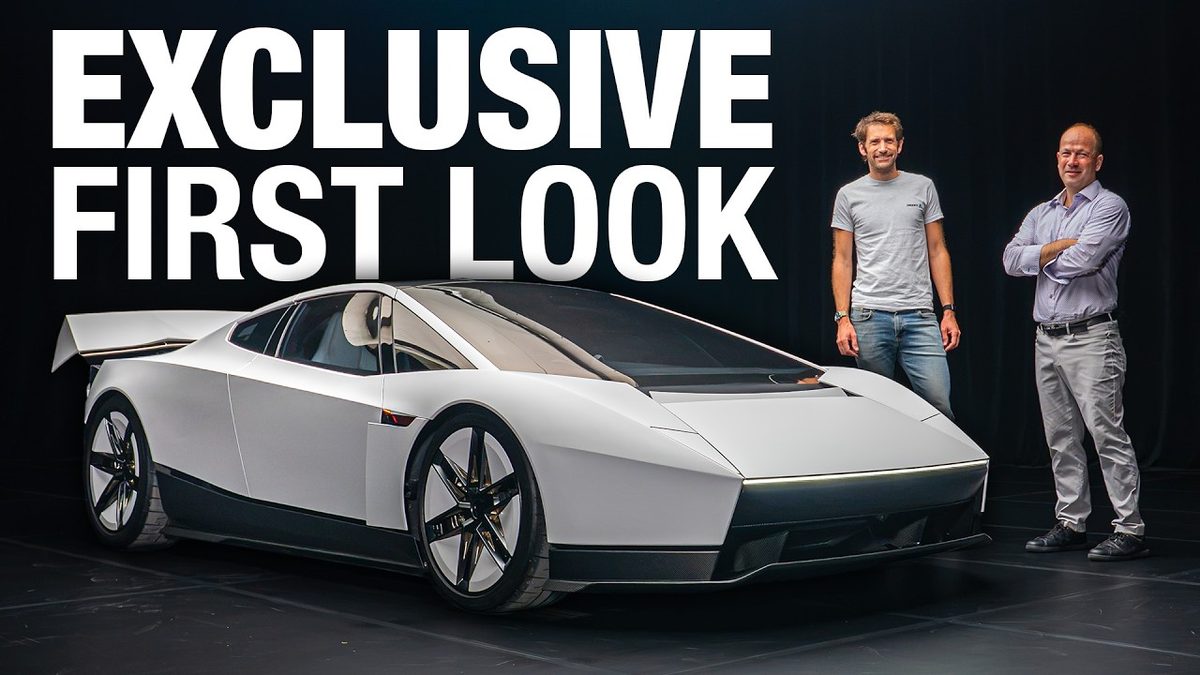
– Unveiled the next-gen Roadster
– Record deliveries in Canada, Australia, Japan & Taiwan
Post: @Tesla on X, with slides from Tesla's update.
Where the profit went
Tesla actually made more gross profit than a year ago: $5.49 billion against $5.05 billion. Then operating expenses ate it. They rose 39% to $4.78 billion. Most of that was research and development, up from $1.63 billion to $2.76 billion. Stock-based compensation, which Tesla says includes Elon Musk's 2025 pay award, rose from $663 million to $1.17 billion.
CFO Vaibhav Taneja said on the call, according to the call transcript, that the jump came from "SI development costs such as depreciation from additional compute, chip development, and pre-production ramp costs" for Optimus, Megapack 3 and Semi. He added that this "trend of growing OpEx would continue till we commercialize these new products."
Two smaller things also hurt:
- Regulatory credits nearly vanished. They brought in $113 million, down from $417 million a year ago. That money used to be almost pure profit.
- Selling prices fell. Tesla lists lower average selling prices among the main reasons revenue was flat. Car margins still improved, to 18.1% without credits, from 16.3% in Q2. Taneja credited more deliveries in Asia-Pacific.
My read on the cash: strong, but helped by timing
The headline cash number is good. Operating cash flow was $6.26 billion. After $4.73 billion of capital spending, that leaves $1.53 billion of free cash flow, up from −$1.09 billion in Q2. Cash and investments rose $1.9 billion, to $45.4 billion.
But the cash flow statement shows where it came from. Tesla's unpaid bills to suppliers and other accruals rose by $3.99 billion in the quarter. Customer prepayments (deferred revenue) added another $1.26 billion. Add up every working-capital line and they contributed about $2.59 billion. Take that out, and operating cash flow is about $3.67 billion. That is less than the $4.73 billion Tesla spent on factories and compute.
| Cash math (my calculation) | Q3 2025 | Q3 2026 |
|---|---|---|
| Operating cash flow | $6.24B | $6.26B |
| Of which: working-capital swing | +$2.08B | +$2.59B |
| Operating cash flow before working capital | $4.15B | $3.67B |
| Capital spending | $2.25B | $4.73B |
| Free cash flow before working capital | +$1.91B | −$1.06B |
My calculation from the six "changes in operating assets and liabilities" lines in Tesla's Q3 2026 cash flow statement. Working-capital swings are normal and often reverse. This is a gauge of underlying cash, not an official Tesla figure.
To be fair, a year ago working capital helped too, by about $2.08 billion. What changed is the spending. At the same underlying cash generation, last year's capital budget was covered. This year's isn't. That is why the next item matters.
The capex math: Q4 is set to be the biggest yet
Taneja said Tesla now expects capital spending of "approximately $20 billion" for 2026, to be funded "primarily from our cash flows from operations." Through three quarters, Tesla has spent $13.01 billion ($2.49B + $5.79B + $4.73B). Hitting about $20 billion implies roughly $7 billion in Q4 alone, which would be Tesla's biggest quarter of capital spending on record, beating Q2's $5.79 billion.
Tesla also says it lined up the ability to borrow up to $30 billion during the quarter, though Taneja said it does not plan to draw on it this year. He said capex "for the next few years would continue to expand" as Tesla adds Robotaxis, Optimus capacity, solar manufacturing, compute and a chip fab. In my Q3 preview, the open question was whether Q2's cash burn would last. The answer is that it paused, and the bigger spending is still ahead.
The bright spots, in numbers
- FSD: 1.74 million active paid FSD (Supervised) customers, up 67% from 1.04 million. The 260,000 added in Q3 is the biggest quarterly jump in Tesla's five-quarter table. Over 75% of new North American deliveries came with paid FSD, and Taneja said half of the paid base is now on subscriptions.
- Services: gross profit hit a record $734 million. Tesla's Robotaxi business is reported inside this segment.
- Energy: gross margin jumped to 33.1% from 20.4% in Q2. Treat this one carefully. Taneja said it was "primarily attributed to tariff refunds recognized in the quarter and warranty true-downs." Those are one-offs. Energy revenue fell 16% even though storage deployments rose 10%, to 13.7 GWh. Tesla partly blames tariff-related refunds to customers.
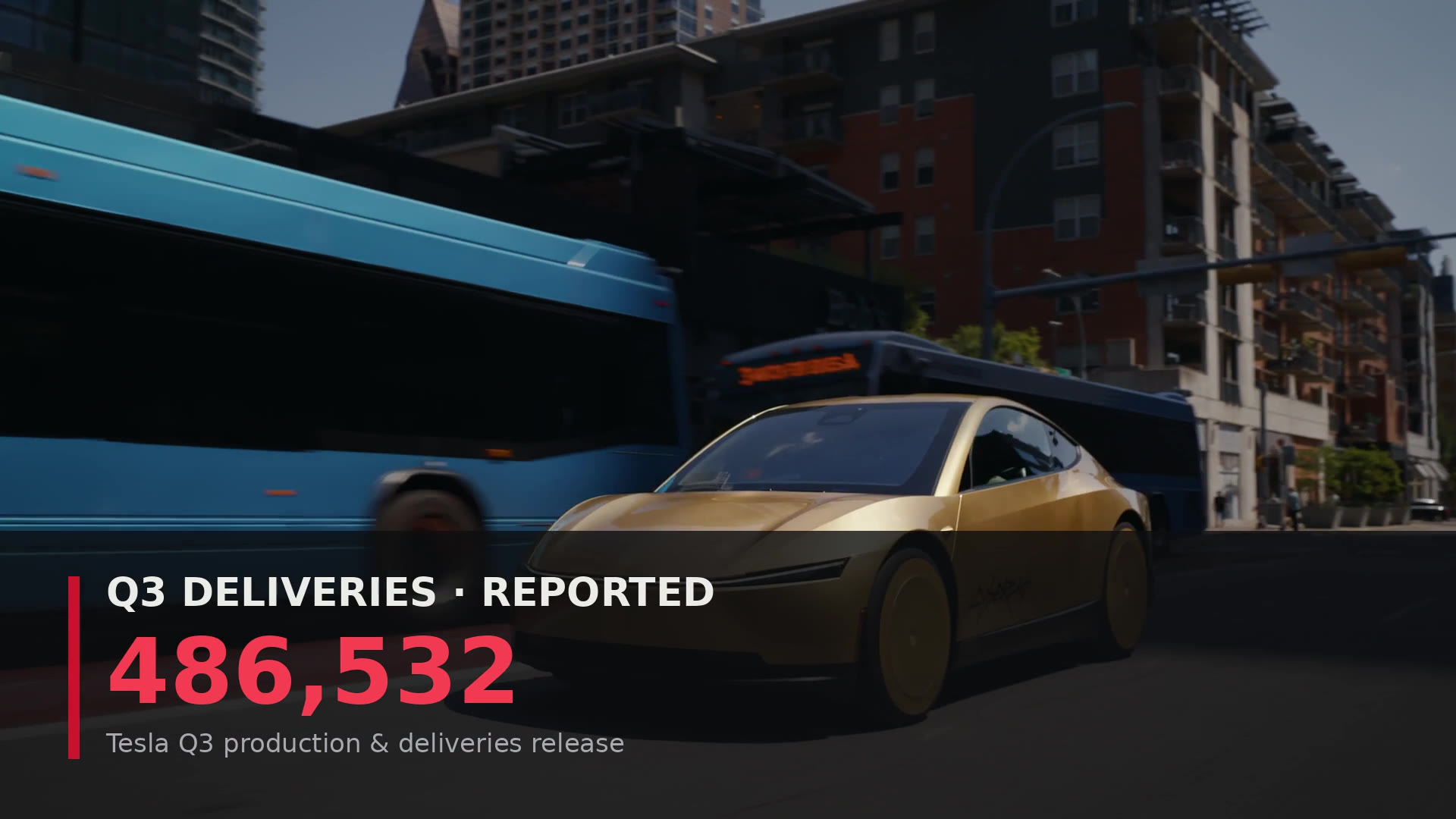
- Demand: deliveries were 486,532, down 2%, while production rose 4% to 464,391. Inventory fell to 11 days of supply, and Tesla says its passenger car backlog is the largest in four years, with batteries the limit on output.
- Milestones done: Tesla's 10 millionth vehicle, Semi volume production in Nevada, Megapack production at Megafactory Texas, and the first Megapacks built entirely with Tesla's own LFP cells.
People are buying FSD with a car attached, not the other way around
— Elon Musk (@elonmusk) October 21, 2026
Post: @elonmusk on X.
Robotaxi: how fast is it really growing?
Tesla's update says the fleet reached "nearly two million cumulative unsupervised miles" by September 30, up eightfold in the quarter. Tesla's separate Robotaxi Safety Report puts the total at 3.1 million by October 18 (my breakdown here). If both counts match, that's roughly 1.1 million miles in 18 days, or about 60,000 a day in early October. Across the whole of Q3, the average was under 20,000 a day. The two documents may not count in exactly the same way, so take this as a rough guide. Still, the curve is clearly bending upward.
Musk was blunt about the money side: "it's not going to move the needle this quarter." He said it "starts to become noticeable probably in Q2 and then probably a big deal by Q3 or Q4 of next year."
Done vs. promised: every date from the call
| Item | Status | Who said it |
|---|---|---|
| Cybercab rides in Austin (since Sept 3) | Done | Tesla update |
| Optimus production on Fremont's high-volume lines | Done (Musk calls it "early production") | Tesla update; Musk |
| Cybercab launch in Dallas | Announced: "next month" | Ashok Elluswamy |
| Cybercab in "some other cities" | Plan: before end of 2026 | Vaibhav Taneja |
| First Cybercabs sold to customers | Goal: "trying to" by end of 2026 | Lars Moravy |
| First customer cars driving unsupervised in the Robotaxi network | Estimate: "somewhere around Q2 next year" | Ashok Elluswamy |
| EU-wide FSD (Supervised) approval | Hope: "surprised if it takes longer than Q1" (2027). Not in Tesla's control. | Elon Musk |
| Terafab first test chip | Hope: around May or June 2027. Useful chips at volume around Q3 2028. | Elon Musk |
| Optimus delivered to other companies | Expected: around the end of 2027 | Elon Musk |
| 400 MW of AI training compute | Plan: by end of 2026 | Tesla update |
| 5 million vehicles a year | Aim: "approximately 2030" | Elon Musk |
| Capex of about $20 billion in 2026 | Guidance | Vaibhav Taneja |
Quotes from the Q3 2026 call transcript and Tesla's webcast; "done" items from the Q3 update. Everything not marked done is a forward-looking statement, and Musk's timelines have often slipped.
On a possible SpaceX merger, Musk said only that he had "said everything that should be said yesterday," on SpaceX's own call, and Tesla took no questions on it. The filing does show how tied together the two companies already are. Tesla bought $2.0 billion of SpaceX stock in Q1 and booked a $142 million paper loss on it this quarter, after a $1.0 billion paper gain in Q2.
My read
This was a quarter of two stories. The car business is steadier than it looked six months ago: margins up, inventory lean, a four-year-high backlog and FSD becoming the real reason people buy. But Tesla is now spending like an AI and robotics company. R&D is up 69%, capex is on track for about $20 billion, and Q4 could be the biggest spending quarter in its history. The cash return is real, but much of it is timing. The test for Q4 is whether Robotaxi miles and Megapack demand grow fast enough to cover that bill without touching the $30 billion credit line. Is Tesla spending at the right moment, or too early?
Sources: Tesla Q3 2026 Update, SEC Form 8-K Exhibit 99.1 (21 Oct 2026); Tesla Investor Relations (ir.tesla.com); Tesla Q3 2026 earnings webcast (21 Oct 2026) and call transcript via StockAnalysis; @Tesla and @elonmusk on X (21 Oct 2026); Tesla Robotaxi Safety Report; CNBC, Tesla Q3 2026 earnings report (21 Oct 2026), for LSEG estimates and after-hours move. Working-capital, capex and Robotaxi pace calculations are mine. Not investment advice.
— Alex R