SpaceX · Starlink · 27 Oct 2026
Verizon says Starlink Mobile needs up to $500 billion and 4 to 6 years. Musk says 2 or 3
Verizon CEO Dan Schulman used Monday's earnings call to put a price on a SpaceX phone network: 65,000 to 80,000 cell sites, $300 billion to $500 billion, and a minimum of four to six years. Musk replied on X a few hours later: "Will take 2 or 3 years." Neither number comes from a plan anyone has filed. But the gap between them is the whole Starlink Mobile debate, and one figure stands out: SpaceX spent more on capex last quarter than Verizon plans to spend in all of 2026. (All figures as stated on 26 Oct 2026.)
On this page

What Verizon said
Verizon's third-quarter call started at 8:30am ET (5:30am PT; ) on Monday, 26 Oct 2026. Asked about SpaceX by Citi's Michael Rollins, Schulman opened with a line you don't often hear from a rival CEO: "I also operate under the assumption that everything SpaceX says they will do, they will do, and that they will execute flawlessly" (transcript).
Then he laid out his case. Here's what he said, in order:
- Satellites alone can't compete in cities. In suburban and urban areas, "where like 98% of our revenues are," he said Verizon is "somewhere between 100x-1,000x more efficient." That's his claim, and he didn't show the math.
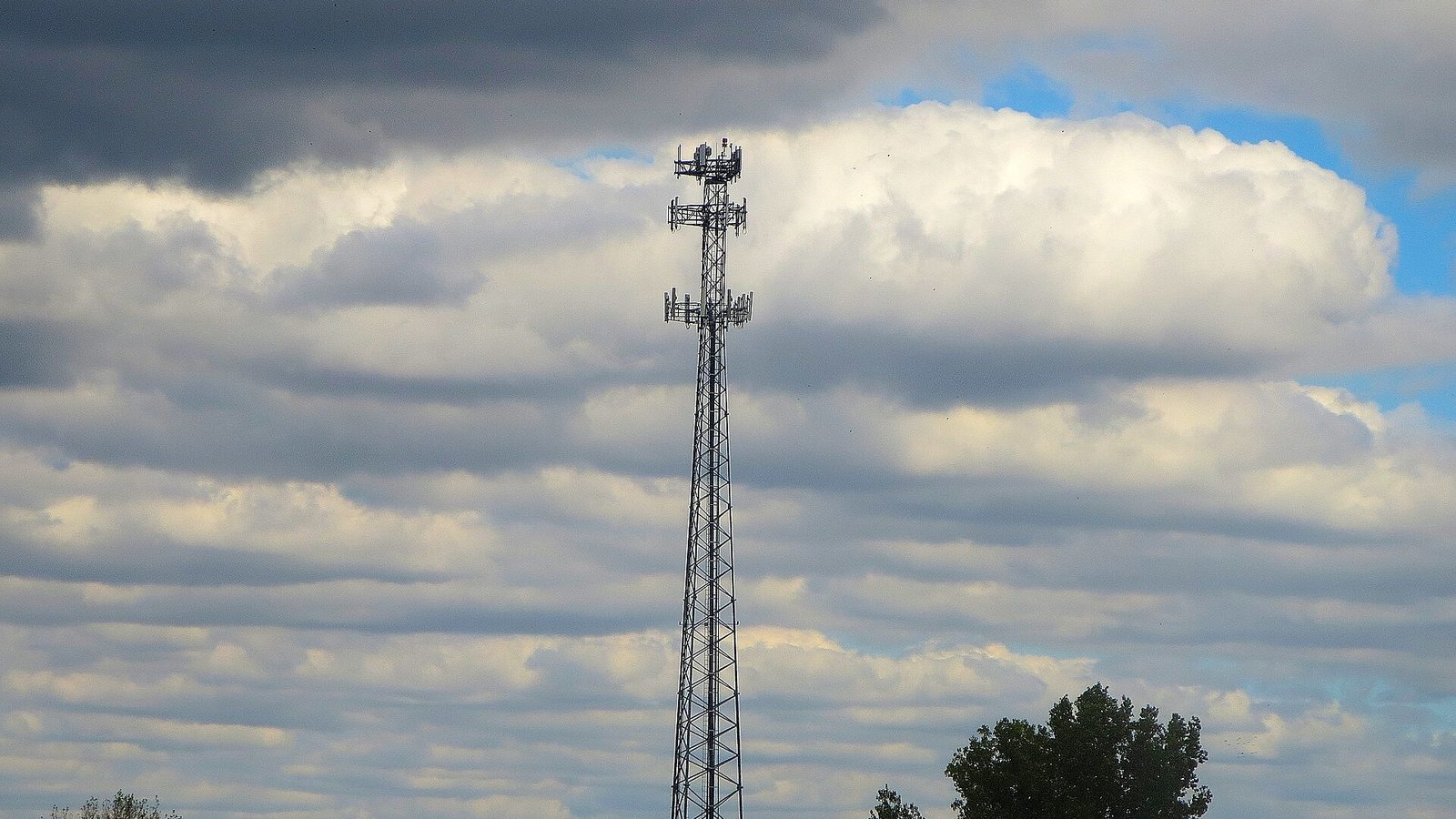
- So SpaceX needs a ground network. He said Verizon knows "who they're talking to on towers," and that a SpaceX network would need 65,000 to 80,000 macro sites, plus backhaul, radio equipment (RAN) and "a tremendous amount of spectrum."
- The bill. "A minimum of four to six years to fully build that out," at "somewhere between $300 billion and $500 billion over the next seven or eight years." After that, he said, SpaceX would still need to build retail, customer service and back-office systems.
- The result. SpaceX would become "the sixth, not the fourth" competitor. He didn't list the other five. My guess is he's counting the cable companies, which already sell phone plans on Verizon's network.
- No help from Verizon. He said there are "no back doors" in Verizon's wholesale (MVNO) deals and he sees "absolutely no benefit whatsoever" in giving one to a satellite provider. He did leave the door open to working with satellite providers, directly or through Verizon's joint venture, on a "complementary service" for remote areas.
What Musk said
At 1:02pm ET (10:02am PT; ), Sawyer Merritt posted Schulman's quotes on X. Musk replied at 1:40pm ET (10:40am PT; ) with five words. He didn't respond to the cost estimate.
@SawyerMerritt @Starlink Will take 2 or 3 years
— Elon Musk (@elonmusk) October 26, 2026
To be clear, this is a prediction, not a schedule. SpaceX hasn't published a site count or a budget for a ground network. What it has done is agree to buy low-band spectrum and, according to Bloomberg, start talking to tower owners. On SpaceX's own 20 Oct earnings call, Musk said "we will be building out our terrestrial network," and President Gwynne Shotwell said the near-term priority is flying the Mobile V2 satellites through next year and integrating SpaceX's spectrum purchases "to turn on service in early 2028." The top of Schulman's site range matches the "at least 80,000" sites Bloomberg reported SpaceX is chasing, as we covered in our 80,000 towers story.
The numbers, side by side
| Question | Verizon (Schulman) | SpaceX and others |
|---|---|---|
| Time to build | A minimum of 4 to 6 years | "2 or 3 years" (Musk) |
| Sites needed | 65,000 to 80,000 | At least 80,000 sought, per unnamed sources (Bloomberg) |
| Total cost | $300B to $500B over 7 to 8 years | More than $80B for a nationwide terrestrial network (TD Cowen, via Reuters). SpaceX hasn't given one. |
| Tower rent alone | — | About $4B a year for 80,000 towers at roughly $50,000 each (Goldman Sachs, via Yahoo Finance) |
Verizon and Musk figures as stated on 26 Oct 2026. Bloomberg and TD Cowen figures as reported on 22 Oct 2026. All amounts in US dollars.
The low end of Schulman's range is almost four times TD Cowen's estimate. Neither has shared a full model, so treat both as rough. Schulman didn't break his number down. He listed sites, backhaul, radio equipment and spectrum, and spread it over seven or eight years, while TD Cowen's figure is for the network itself. That alone could explain much of the gap.
My math: what Verizon's estimate really implies
Spread Schulman's range over his own timeline and you get about $37.5 billion a year at the low end ($300 billion over eight years) and about $71 billion a year at the high end ($500 billion over seven).
Compare that with Verizon. Its own guidance for 2026 capital spending is $16.0 billion to $16.5 billion. So Verizon is saying a challenger would have to spend 2.3 to 4.5 times what Verizon itself spends each year on its network, for most of a decade. That's meant to sound impossible.
Now look at SpaceX. It spent $19.59 billion on capex in the third quarter alone, most of it on its AI business. That one quarter is more than Verizon's whole 2026 budget. CFO Bret Johnsen expects $35 billion to $40 billion in Q4, per Reuters. That's roughly what Schulman's low-end estimate needs per year, spent in three months.
That doesn't mean SpaceX will spend that kind of money on towers. Most of it goes to AI computing, and the company just lined up a $40 billion lease to pay for more GPUs. But it does weaken Verizon's strongest argument. A cost that would sink almost any new carrier is a lot less scary for a company already spending at that rate.
Per site, Schulman's numbers work out to about $3.75 million (at $300 billion for 80,000 sites) up to about $7.7 million (at $500 billion for 65,000). That covers far more than steel and radios, but it shows how much his estimate is carrying.
Meanwhile, in Brazil
Less than three and a half hours after Verizon's call began, Starlink said its phone service had gone nationwide in Brazil. It's a very different product from a US carrier, but it was a well-timed reminder of what SpaceX can switch on without a single tower.
Starlink Mobile is now live in Brazil with @vivobr! 50M customers can use apps and messaging in cellular dead zones — with 7M phones already connected. This is the first nationwide service to cover the entire country.
— Starlink (@Starlink) October 26, 2026
- Who gets it: about 50 million Vivo customers on eligible plans, nearly half of Vivo's 105 million mobile base, free for 12 months. Business customers get three months free (CNN Brasil).
- What it does: messaging and selected apps only, including WhatsApp, SMS, iMessage, Google and Apple Maps, and the Vivo app (Exame). Video calls and browsing general websites stay blocked (O Globo).
- The 7 million: people who connected during the test week before launch, per CNN Brasil.
- What's still a pledge: Starlink says "Starlink Mobile V2" will bring high-speed mobile internet to all Brazilians. There's no date. Brazil's regulator approved part of the 2 GHz spectrum Starlink asked for earlier this month (our story).
Brazil also shows exactly where Schulman's argument applies. Vivo says its network already covers about 98% of Brazil's population, Exame reported. Starlink is filling in the remote land the towers don't reach, not competing with Vivo in São Paulo. That's the kind of "complementary" role Schulman said Verizon is open to. The US fight is over the suburbs and cities where, by his count, Verizon makes about 98% of its revenue, and that's where towers come in.
What's done, and what's just talk
- Done: nationwide satellite messaging live in Brazil with Vivo (26 Oct). An 800 MHz US spectrum deal with Grain Management is signed, but still waiting on FCC approval (our story).
- Talks only: access to at least 80,000 US cell sites, based on unnamed sources. No tower lease has been announced.
- Predictions: Musk's "2 or 3 years," and Schulman's "four to six years" and "$300 billion and $500 billion." Neither comes from a filed plan.
What to watch
- A signed tower deal. A lease with Crown Castle, American Tower or Vertical Bridge would be the first hard sign of a ground network.
- The FCC. Approval of the Grain 800 MHz deal is what lets SpaceX put low-band airwaves on those towers.
- Upper C-band. Schulman expects that auction in the first half of next year and assumes SpaceX bids. He also said the spectrum takes four to five years to clear, which would run past Musk's timeline if SpaceX needed it.
If you count from now, Musk's two to three years points to a network by late 2028 or late 2029. Schulman's minimum points to late 2030 at the earliest. Verizon's own CEO says he assumes SpaceX will "execute flawlessly," and SpaceX's capex last quarter alone was bigger than Verizon's budget for the whole year.
Sources: Verizon Q3 2026 earnings call transcript (26 Oct 2026); Verizon call webcast page; Verizon 3Q 2026 results release (capex guidance); SpaceX Q3 2026 earnings call transcript (20 Oct 2026); Elon Musk on X (26 Oct 2026); Sawyer Merritt on X (26 Oct 2026); Starlink on X (26 Oct 2026); CNN Brasil/Estadão (26 Oct 2026); Exame (26 Oct 2026); O Globo (26 Oct 2026); Bloomberg via Yahoo Finance (22 Oct 2026); Reuters via Investing.com (22 Oct 2026, TD Cowen estimate); Yahoo Finance (26 Oct 2026, Goldman Sachs tower-rent estimate); Reuters via Investing.com (26 Oct 2026, SpaceX Q4 capex guidance); SpaceX Q3 2026 results, via our Q3 results story. The per-year, per-site and capex comparisons are my own math. Photo: Dwight Burdette, CC BY 3.0, via Wikimedia Commons (cropped). Embedded posts: Elon Musk (@elonmusk), Starlink (@Starlink).
— Alex R